
Few phrases carry as much warmth, spiritual depth, and cultural weight as “May Allah bless you” in Arabic. Whether you have heard it at a mosque, read it in a message from a Muslim friend, or encountered it while learning Arabic, this expression is far more than a polite courtesy. It is a sincere prayer, a spiritual gift, and a window into the heart of Islamic culture.
In this guide, you will discover the true meaning behind this beautiful phrase, learn how to say it correctly for different people and occasions, and understand why blessing others in Islam is considered an act of worship. Whether you are a student of Arabic, a curious reader, or a Muslim looking to deepen your understanding of everyday duas, this article will give you everything you need.
Understanding the Meaning Behind “May Allah Bless You in Arabic”
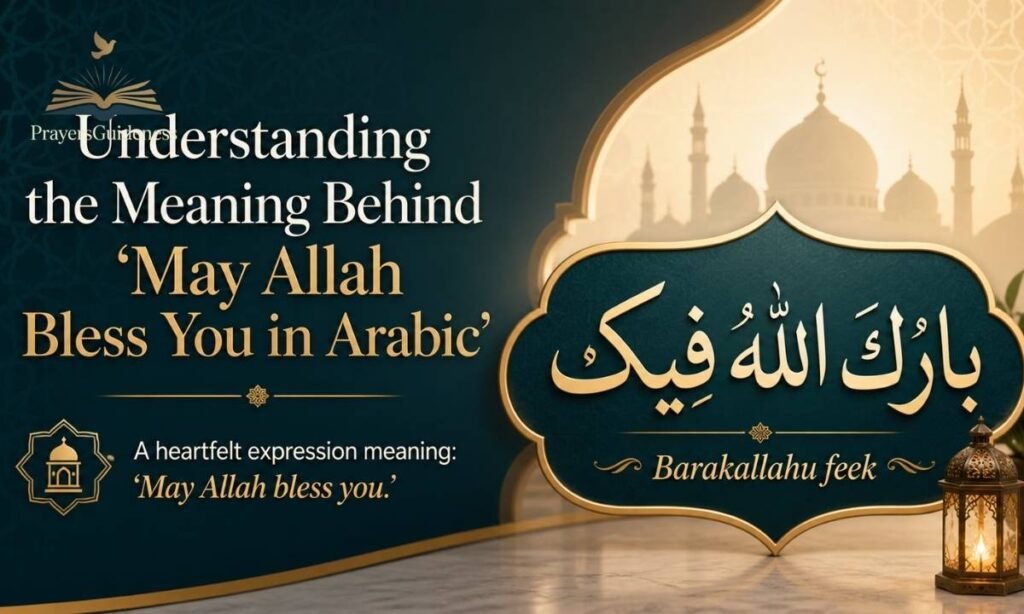
The phrase “May Allah bless you” in Arabic is most commonly expressed as بَارَكَ اللّٰهُ فِيكَ — transliterated as Barakallahu Feek. Every word in this phrase carries meaning.
- Baraka (بارك) — from the root word meaning “to bless” or “to increase in goodness”
- Allah (الله) — the Arabic name for God, used by Muslims and Arabic-speaking Christians alike
- Feek (فيك) — meaning “in you” or “upon you”
Together, the phrase literally means: “May Allah place His blessings in you.” It is not a casual well-wish. It is a genuine supplication — a dua — asking God directly to fill another person with divine goodness, peace, and increase.
The concept behind the phrase is rooted in the Arabic word Barakah (بركة), which refers to a divine blessing that multiplies what it touches. When you say Barakallahu Feek, you are invoking that quality of divine grace upon the person in front of you.
What Does “May Allah Bless You” Mean in Islam?
In Islam, blessing someone is an act with spiritual weight attached to it. It is not simply a cultural reflex — it is a recognized form of dua, and dua is one of the most beloved acts of worship in Islam.
When a Muslim says Barakallahu Feek to another person, several things happen simultaneously:
- The speaker is directing a sincere prayer to Allah on behalf of someone else
- The recipient feels the warmth of genuine care wrapped in faith
- According to hadith, angels respond to sincere duas for others by saying “Ameen, and may you receive the same”
- The relationship between the two people is spiritually strengthened
The Prophet Muhammad (peace be upon him) actively encouraged Muslims to exchange blessings and kind words. He taught that making dua for others in their absence is one of the most sincere and rewarded forms of supplication — because the person making it receives nothing material in return.
This is why “May Allah bless you” in Islam is far more than a phrase. It is a small but complete act of faith.
The Power of Blessings in Arabic and Islamic Culture
Arabic culture is deeply interwoven with the language of blessing. From the moment a child is born to the hour someone receives good news, blessings flow naturally in conversation. This is not performance — it is a cultural expression of the belief that all good things come from Allah alone.
In Arabic-speaking homes, workplaces, and mosques, blessings punctuate everyday speech the way “thank you” does in English — except they carry a vertical dimension, pointing upward toward God rather than horizontally between people only.
When someone receives a compliment in Arabic culture, the response is often Barakallahu Feek — not just to say “thank you” but to redirect credit toward the divine. When someone does you a favor, you do not just say shukran (thank you) and move on. You say Jazakallahu Khayran or Barakallahu Feek, effectively asking God to reward them in ways you yourself cannot.
This cultural habit keeps gratitude anchored in faith rather than letting it become a mere social transaction. It is one of the most quietly beautiful features of the Arabic language.
Common Arabic Phrases for “God Bless You” and Their Meanings
Arabic offers multiple ways to express blessings, each with its own shade of meaning and appropriate context. Here are the most important ones:
| Arabic Phrase | Transliteration | Meaning | Best Used When |
| بَارَكَ اللّٰهُ فِيكَ | Barakallahu Feek | May Allah bless you | After a favor, kindness, or compliment |
| الله يبارك فيك | Allah Yubarik Feek | May Allah grant you blessings | In prayers, casual conversations |
| جَزَاكَ اللّٰهُ خَيْرًا | Jazakallahu Khayran | May Allah reward you with goodness | When someone helps or does something beneficial |
| يَرْحَمُكَ اللّٰهُ | Yarhamuk Allah | May Allah have mercy on you | After someone sneezes (saying Alhamdulillah) |
| اللّٰهُ يُكْرِمُكَ | Allah Yukrimuk | May Allah honor and reward you | Acknowledging someone’s good character or deeds |
| الله معك | Allah Maak | May Allah be with you | As a farewell or comfort phrase |
| في أمان الله | Fi Amanullah | In Allah’s protection | When saying goodbye or wishing safety |
| اللّٰهُمَّ بَارِكْ | Allahumma Barik | O Allah, bless | When seeing something beautiful, to ward off the evil eye |
Each of these phrases is a complete supplication in its own right. Knowing which one to use in which situation is part of understanding Arabic social and spiritual etiquette.
How to Say “God Bless You” in Arabic the Right Way?
The most important thing to understand about saying “God bless you” in Arabic is that pronunciation and sincerity both matter. Here is a step-by-step pronunciation guide for the most common phrase:
Barakallahu Feek — broken down:
- Ba — as in “bar”
- ra — soft rolling r
- kal — like “kal” in calendar
- la — soft “la”
- hu — “hoo”
- Feek — rhymes with “seek”
Full pronunciation: Ba-ra-KAL-la-hu FEEK
Quick pronunciation tips:
- Say it slowly at first, then let it become natural with practice
- The “kh” sounds in Arabic are guttural — produced at the back of the throat
- The double letters in Arabic carry slightly more weight — hold them a beat longer
- Context and sincerity matter more than perfection — native speakers appreciate any genuine attempt
How to Use “May Allah Bless You” Correctly: Gender, Plural, and Grammar Rules?
Arabic is a deeply gendered language, and using the correct form of a blessing shows both respect and linguistic awareness. Here is a complete breakdown:
When addressing one male: بَارَكَ اللّٰهُ فِيكَ — Barakallahu Feek
When addressing one female: بَارَكَ اللّٰهُ فِيكِ — Barakallahu Feeki (The ending changes from “Feek” to “Feeki” — a small but important difference)
When addressing two people (dual): بارك الله فيكما — Barakallahu Feekuma (Commonly used at weddings or to address a couple)
When addressing a group of males or a mixed group: بارك الله فيكم — Barakallahu Feekum
When addressing a group of females: بارك الله فيكن — Barakallahu Feekunna
Why this matters:
- Arabic grammar treats gender as part of basic sentence respect
- Using the wrong form in formal settings can communicate a lack of care or knowledge
- In everyday conversation, native speakers are forgiving — but knowing the correct form shows genuine cultural engagement
- The same gender rules apply to Allah Yubarik Feek — it becomes Allah Yubarik Feeki for a female and Allah Yubarik Feekum for a group
How to Respond When Someone Says “May Allah Bless You” in Arabic?
Knowing how to respond appropriately is just as important as knowing the phrase itself. Here are the standard and most widely accepted responses:
When someone says Barakallahu Feek to you:
The most correct and widely used response is: وَفِيكَ بَارَكَ اللّٰهُ — Wa Feeka Barakallah Meaning: “And may Allah bless you too.”
If the person said it to a female, she responds: وَفِيكِ بَارَكَ اللّٰهُ — Wa Feeki Barakallah
Other appropriate responses:
- آمِين (Ameen) — “Amen” — a simple, sincere acceptance of the blessing
- وَإِيَّاكُمْ (Wa Iyyakum) — “And to you as well” — used for groups or in formal settings
- جَزَاكَ اللّٰهُ خَيْرًا (Jazakallahu Khayran) — “May Allah reward you with goodness” — a fuller return blessing
When someone says Jazakallahu Khayran to you: The correct response is وَإِيَّاكَ (Wa Iyyaka) — “And to you as well.”
When someone says Yarhamuk Allah after your sneeze: First say الحمد لله (Alhamdulillah — Praise be to Allah), then after Yarhamuk Allah is said to you, respond with يَهْدِيكُمُ اللّٰهُ (Yahdikum Allah) — “May Allah guide you.”
Knowing these responses turns a passive blessing into an active exchange — the very kind of warm spiritual interaction the Prophet (peace be upon him) encouraged.
Regional Variations: How “May Allah Bless You” Differs Across the Arab World
Arabic is not one monolithic language. Across 22 Arabic-speaking countries, dialects, expressions, and even the specific blessings people use vary meaningfully. Understanding these regional differences is key to truly appreciating the richness of Arabic blessing culture.
Gulf Region (Saudi Arabia, UAE, Kuwait, Qatar, Bahrain, Oman):
- Jazakallahu Khayran is extremely common, especially in Islamic contexts
- طال عمرك (Tal Umrak — “May God prolong your life”) is used respectfully with elders
- Gulf Arabic often reflects a more formal, Islamic-register style of speech in everyday conversations
Levantine Arabic (Syria, Lebanon, Jordan, Palestine):
- الله يعطيك العافية (Allah yatik al-afiya — “May God grant you health”) is used where Gulf speakers would say Barakallahu Feek
- Levantine dialect is known for warmth and expressiveness in blessing exchanges
- الله معك (Allah Maak — “May God be with you”) is frequently used as a farewell
North Africa (Egypt, Morocco, Tunisia, Algeria, Libya):
- بارك الله فيك (Barak Allahu Feek) is the dominant blessing phrase and used broadly in daily life
- In Morocco and Tunisia, French influence has created some mixed blessing expressions in urban settings
- Egyptian Arabic, the most widely understood dialect due to media, uses Barakallahu Feek in both religious and casual contexts
Modern Standard Arabic (MSA):
- Used in formal writing, broadcasting, and religious settings across all Arab countries
- بَارَكَ اللّٰهُ فِيكَ in its full, uncontracted form is the MSA standard
- بارك الرحمن (Barakarrahman — “May the Most Merciful bless you”) is a more elevated, formal variation used in religious gatherings
Understanding these variations means you can use the right phrase in the right context — whether you are speaking to someone from Cairo, Riyadh, or Beirut.
When and How to Use “May Allah Bless You” in Conversations?
Knowing what a phrase means is only half the picture. Knowing exactly when to use it is what makes communication natural and culturally appropriate. Here are the most common situations:
After someone does something kind for you: If a colleague stays late to help you, a friend drives you somewhere, or a stranger holds the door — Barakallahu Feek is the perfect response. It says “thank you” while also asking God to reward them in ways you cannot.
After receiving a compliment: If someone praises your work, your appearance, or your character, responding with Barakallahu Feek gently redirects the praise toward God and expresses genuine appreciation.
At celebrations and happy occasions:
- Weddings: بارك الله لكما (Barakallahu Lakuma — May Allah bless you both)
- Graduations and achievements: Barakallahu Feek accompanied by a warm handshake
- New baby: Allahumma Barik — asking Allah to bless the child and protect them from the evil eye
After someone sneezes: When a person sneezes and says Alhamdulillah, the Islamic etiquette is to say Yarhamuk Allah — not Barakallahu Feek. This specific exchange comes directly from authentic hadith.
When saying goodbye: Allah Maak (May Allah be with you) or Fi Amanullah (In Allah’s protection) are warm and faith-filled farewells.
Expressing Gratitude and Well-Wishes in Arabic
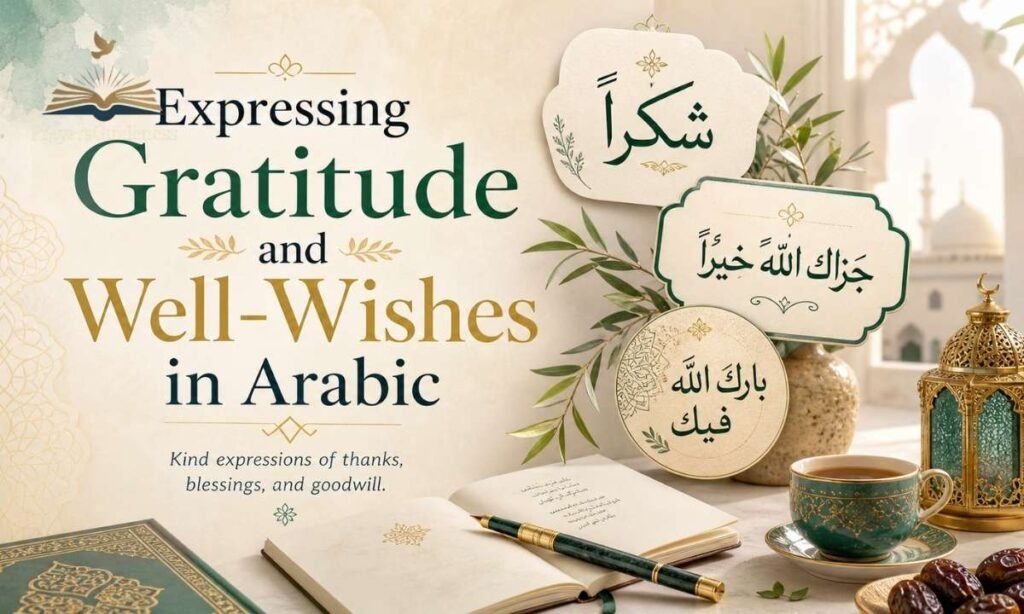
Beyond the core blessing phrase, Arabic offers a rich vocabulary of gratitude and well-wishing that deepens relationships and keeps faith at the center of daily life.
- شُكْرًا (Shukran) — “Thank you” — the most basic expression of gratitude
- جَزَاكَ اللّٰهُ خَيْرًا (Jazakallahu Khayran) — a deeper thanks that asks God to reward the person
- اللّٰهُ يُكْرِمُكَ (Allah Yukrimuk) — “May God honor you” — used to acknowledge someone’s nobility or generosity
- يَعْطِيكَ الْعَافِيَة (Yatik al-Afiya) — “May God grant you health” — common in Levantine Arabic as an all-purpose blessing
- رَبِّي يَحْفَظُكَ (Rabbi Yahfazak) — “May my Lord protect you” — warm, personal, and widely used
Pairing any of these with Barakallahu Feek creates an exchange of gratitude that is richer, more sincere, and more spiritually complete than a simple “thanks” alone.
The Deeper Meaning of “God Be With You” and “Bless You” in Arabic
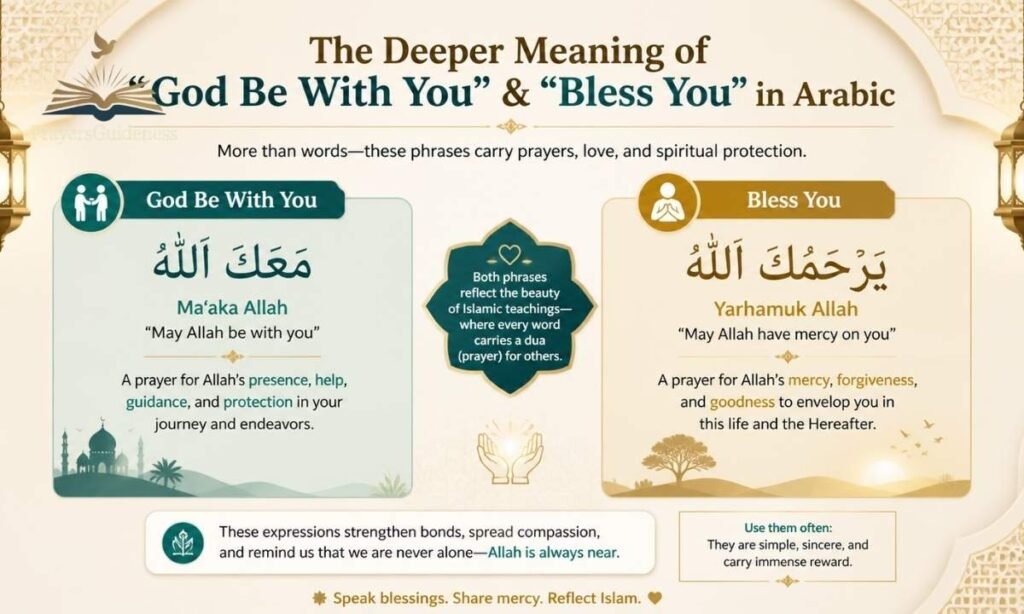
Two phrases that carry profound meaning but are sometimes overlooked are Allah Maak (الله معك — May Allah be with you) and Fi Amanullah (في أمان الله — In Allah’s protection).
Allah Maak does more than wish someone well. It is an acknowledgment that human company and human support have limits — and that the only companion who can truly accompany someone through every challenge is God. When you say Allah Maak to someone facing a long journey, a difficult trial, or a new chapter in life, you are entrusting them to the care of the Divine.
Fi Amanullah carries similar weight. The word aman means both “protection” and “security.” To wish someone Fi Amanullah is to say: may God’s protection be the walls around you and the ground beneath your feet. It is a blessing used especially when someone is traveling, moving to a new place, or going through a time of uncertainty.
Both phrases reveal something essential about Islamic spirituality: that true safety, true companionship, and true blessing all have one source.
The Spiritual Rewards of Blessing Others in Islam
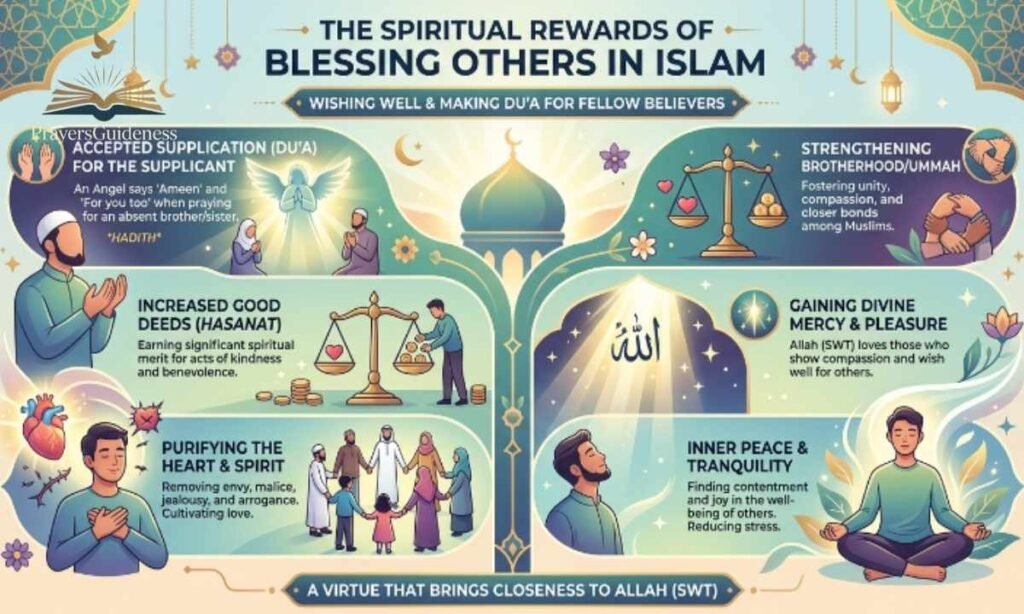
Blessing others in Islam is not just socially beneficial — it is spiritually rewarding in a documented, hadith-confirmed way.
The Prophet Muhammad (peace be upon him) said that when a Muslim makes dua for their brother or sister in their absence, the angels say “Ameen, and may you have the same.” This means every Barakallahu Feek you say with sincerity is a prayer that returns to you multiplied.
Why blessing others carries spiritual reward:
- It is a form of dua — one of the most beloved acts to Allah
- It is free of ego — you gain nothing material, making the intention pure
- It strengthens the bond of the Ummah (the Muslim community)
- It mirrors the character of the Prophet (peace be upon him) who was known for his warmth and generous words
- It plants seeds of kindness that grow in unexpected directions
The Quran itself describes Allah and His angels as sending blessings upon the believers. When a Muslim blesses another, they are participating in that divine pattern of grace flowing through creation. That is not a small thing — it is one of the most quietly profound acts a person can perform.
How Arabic Blessings Strengthen Faith and Community Bonds?
Every time a blessing passes between two people in Arabic, something invisible but real happens: the thread between them tightens. Arabic blessings do not just express goodwill — they create it.
In communities where Barakallahu Feek and Jazakallahu Khayran are exchanged daily, people feel the presence of a shared spiritual framework. The blessing reminds both speaker and listener that they are not just social creatures navigating transactions — they are believers walking a shared path toward the same God.
This is why Islamic scholars consistently note that the culture of blessing is not merely a cultural habit but a form of spiritual maintenance. It keeps relationships from becoming purely transactional. It keeps faith alive in the mundane. And it creates communities where generosity, gratitude, and genuine care are not exceptional — they are the baseline.
Happy Birthday May Allah Bless You: Arabic Birthday Blessings
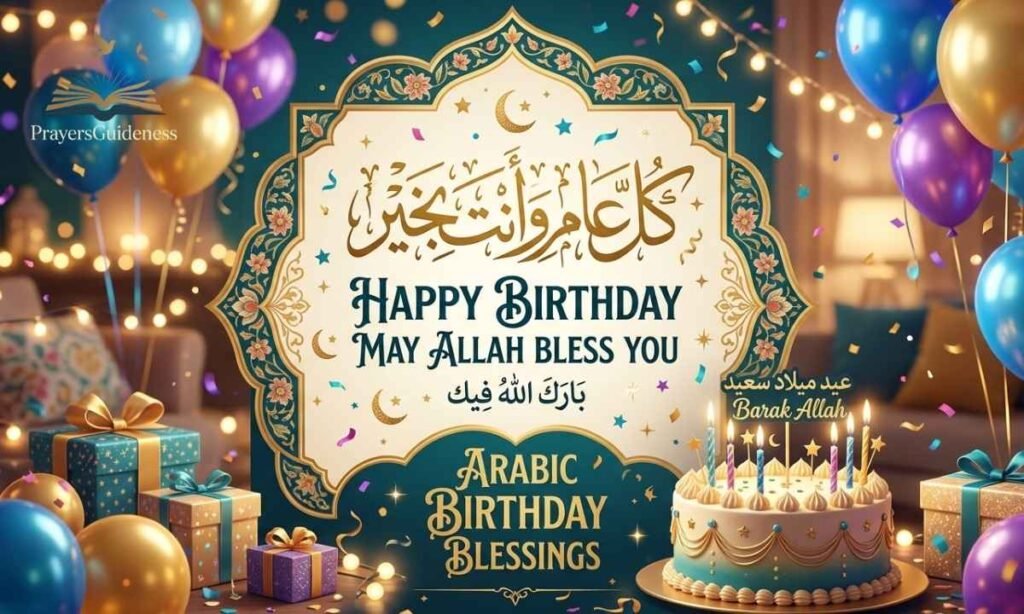
Birthdays are a joyful occasion in Muslim families and communities worldwide, and Arabic offers beautiful ways to extend birthday blessings rooted in faith.
- بارك الله فيك وزادك من فضله — Barakallahu Feek wa zadaka min fadlih — “May Allah bless you and increase His favor upon you”
- عيد ميلاد سعيد، بارك الله لك في سنواتك — Happy birthday, may Allah bless your years
- May Allah bless you on this special day and grant you a life full of health, happiness, and iman (faith)
- May every year bring you closer to Allah and further from harm
- Happy birthday! May Allah shower His Barakah upon you today and every day
These birthday blessings are perfect for sending messages, writing in cards, or sharing on social media to celebrate a loved one in a way that keeps faith at the center of the celebration.
May Allah Bless You with Endless Happiness and Success
Some blessings are written for the big moments — when someone graduates, starts a new job, gets married, or embarks on a new chapter. These extended blessings carry the fullness of what it means to wish someone well in Islam.
- May Allah bless you with endless happiness and make every dream you carry a reality He designed especially for you.
- May Allah grant you success in this life and the next, and may His blessings never leave your side.
- May Allah bless you with a heart full of peace, a life full of purpose, and a future full of everything you have worked and prayed for.
- May Allah protect you, provide for you, and place Barakah in every step of your journey forward.
- May your days be filled with light from above, your home be filled with love that never fades, and your heart be filled with the kind of contentment that only comes from Allah.
- May Allah bless you with the wisdom to recognize His blessings and the gratitude to never take them for granted.
May Allah Bless You Quotes to Share with Loved Ones
These quotes combine the beauty of Islamic blessing with words simple enough to share with anyone you love — through a message, a card, or a social media post.
- “Barakallahu Feek — three words that carry a lifetime of prayer in them.”
- “When I say May Allah bless you, I mean it as a prayer, not just a phrase. I am asking God Himself to take care of you.”
- “The most beautiful thing about Arabic blessings is that they never expire. Every Barakallahu Feek is a gift that keeps giving.”
- “May Allah bless you today, tomorrow, and in every season your life carries you through.”
- “Saying,” May Allah bless you costs nothing but means everything — it is a prayer wrapped in kindness.”
- “Barakallahu Feek — may the blessings of Allah fill every corner of your life that worry has tried to occupy.”
- “In Arabic, to bless someone is to point their life toward God. That is the most generous thing one person can do for another.”
- “May Allah bless you with Barakah — the kind of divine increase that makes a little feel like more than enough.”
Frequently Asked Questions
What is the most common way to say “May Allah bless you” in Arabic?
The most widely used phrase is Barakallahu Feek (بَارَكَ اللّٰهُ فِيكَ) for addressing a male, or Barakallahu Feeki for a female. It means “May Allah place His blessings in you” and is used across virtually all Arabic-speaking countries.
What is the difference between Barakallahu Feek and Jazakallahu Khayran?
Barakallahu Feek is a general blessing wishing divine goodness upon someone, used in many contexts. Jazakallahu Khayran specifically means “May Allah reward you with goodness” and is typically used in response to someone’s helpful action or kindness.
How do I respond when someone says Barakallahu Feek to me?
The most appropriate response is Wa Feeka Barakallah (وفيك بارك الله) — “And may Allah bless you too.” You can also simply say Ameen as an acceptance of the blessing.
Is “May Allah bless you” only used by Muslims?
While the phrase is rooted in Islamic tradition, it is used by Arabic-speaking Christians and other communities across the Arab world as well. The phrase reflects the deeply God-centered nature of the Arabic language and culture more broadly.
How do I say “May Allah bless you” to a group of people?
For a mixed group or group of males, say Barakallahu Feekum (بارك الله فيكم). For a group of females, say Barakallahu Feekunna (بارك الله فيكن).
What does Barakah mean in Islam?
Barakah (بركة) refers to a divine blessing that causes increase and goodness in all things it touches — time, wealth, relationships, and health. It is not something humans can manufacture; it is a gift from Allah that multiplies what it is placed in.
When should I say Allahumma Barik instead of Barakallahu Feek?
Allahumma Barik (اللهم بارك — “O Allah, bless”) is most commonly said when you see something beautiful or impressive, as a way of asking Allah to bless it and protect it from the evil eye. Barakallahu Feek is directed at a specific person as an expression of gratitude or goodwill.
Conclusion
“May Allah bless you” in Arabic is one of the most layered and beautiful phrases in any language. It is simultaneously a greeting, a prayer, a cultural expression, and an act of worship. When you say Barakallahu Feek, you are not just being polite — you are asking the Creator of the universe to pour goodness into the life of another person. That is an extraordinary thing to do with three small words.
Whether you are learning Arabic, deepening your Islamic practice, or simply trying to connect more meaningfully with the people you love, mastering this phrase and the culture around it is a gift worth giving yourself. Use it sincerely, use it generously, and trust that every blessing you send outward has a way of finding its way back to you.