How Many Rakats Are in Each 5 Prayer?
How Many Rakats Are in Each Prayer? Complete Salah Guide
What Is a Rakat in Salah?
A Rakat (Rak’ah) is one complete unit of Salah that includes a specific sequence of standing, Quranic recitation, bowing (Ruku), and prostration (Sujood). Each prayer consists of a particular number of Rakats, depending on whether it is Fajr, Dhuhr, Asr, Maghrib, or Isha. Understanding what a Rakat means is important for beginners because it helps them follow the correct structure of Salah.
A typical Rakat begins with standing and reciting the required portions of the Quran, including Surah Al-Fatihah. The worshipper then moves into Ruku while glorifying Allah, rises from Ruku, and performs two Sujoods with a sitting position between them. After completing these movements and recitations, one Rakat is complete. The worshipper then continues with the next Rakat when the prayer requires more than one.
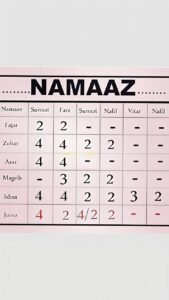
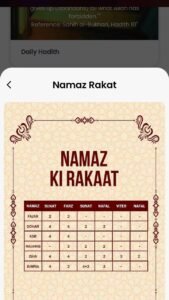
The number of Rakats differs between the five daily prayers. For example, Fajr has two obligatory Rakats, Dhuhr has four, Asr has four, Maghrib has three, and Isha has four obligatory Rakats. There are also Sunnah and Nafl prayers that can be performed in addition to the obligatory Rakats, with details varying according to Islamic schools and established traditions.
For beginners, learning how one complete Rakat is performed makes it much easier to understand the entire Salah. It is also important to count the Rakats carefully, especially during longer prayers, so that the required number is completed. With regular practice, recognizing each Rakat and following the correct prayer sequence becomes natural and easier.
How Many Rakats Are in Fajr Prayer?
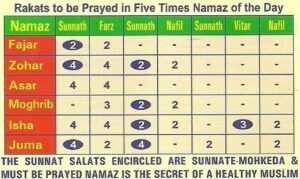
Fajr prayer is the first of the five daily obligatory prayers and has 2 obligatory (Fard) Rakats. Before these two Fard Rakats, Muslims commonly perform 2 Sunnah Rakats, which are strongly emphasized. Therefore, the commonly practiced Fajr prayer consists of 2 Sunnah Rakats followed by 2 Fard Rakats.
The two Fard Rakats are the obligatory portion of Fajr. In each Rakat, the worshipper stands for Quranic recitation, performs Ruku, rises from Ruku, and then performs two Sujoods. After completing the second Rakat, the worshipper sits for the final Tashahhud, recites the required supplications, and ends the prayer with Salam.
The 2 Sunnah Rakats of Fajr are especially important and have a strong status in Islamic practice. They are performed before the Fard prayer. The exact details of recitation and whether certain additional practices are emphasized can differ between recognized Islamic schools, so beginners should follow a trusted qualified scholar or established local practice.
For a simple daily reminder, remember: Fajr = 2 Sunnah + 2 Fard. If someone is short on time because sunrise is approaching, the priority is to ensure the obligatory Fajr prayer is performed within its valid time. Learning the Rakat structure gradually can help beginners perform Fajr confidently and correctly.
How Many Rakats Are in Dhuhr Prayer?
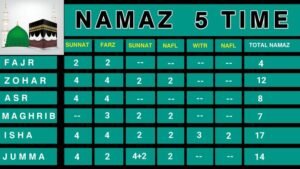
Dhuhr prayer is the second of the five daily prayers and its obligatory portion consists of 4 Fard Rakats. In addition to the Fard prayer, Muslims commonly perform Sunnah Rakats before and after it. A commonly followed arrangement is 4 Sunnah before Dhuhr, 4 Fard, and 2 Sunnah after Dhuhr, although practices can vary among Islamic schools.
The 4 Fard Rakats are the essential obligatory part of Dhuhr. In each Rakat, the worshipper stands and recites the required Quranic passages, performs Ruku, rises from Ruku, and completes two Sujoods. After the second Rakat, the worshipper sits for the first Tashahhud and then stands for the third and fourth Rakats. After completing the fourth Rakat, the final sitting, supplications, and Salam complete the prayer.
The Sunnah prayers performed around Dhuhr are voluntary prayers with significant importance in Islamic practice. Many Muslims observe the Sunnah before and after the Fard prayer as part of the regular practice of the Prophet Muhammad ﷺ. Additional Nafl prayers may also be performed, depending on personal practice and the Islamic school being followed.
For beginners, the easiest way to remember the obligatory portion is Dhuhr = 4 Fard Rakats. If including the commonly practiced Sunnah prayers, the arrangement is often 4 Sunnah + 4 Fard + 2 Sunnah. Learning the obligatory Rakats first and then adding the Sunnah prayers can make the complete Dhuhr routine easier to understand.
How Many Rakats Are in Asr Prayer?
Asr is the third of the five daily obligatory prayers, and it consists of 4 Fard Rakats. These four Rakats are the obligatory portion that must be performed within the valid time of Asr prayer. Muslims may also perform Sunnah or Nafl prayers before Asr according to their Islamic school and personal practice.
The 4 Fard Rakats follow the standard structure of Salah. In the first two Rakats, the worshipper stands for Quranic recitation, performs Ruku, rises from Ruku, and completes two Sujoods. After the second Rakat, the worshipper sits for Tashahhud and then stands for the third and fourth Rakats. After completing the fourth Rakat, the final Tashahhud, Durood, Dua, and Salam complete the prayer.
A commonly practiced Sunnah prayer before Asr consists of 4 Rakats, although its status and emphasis differ from the strongly emphasized Sunnah prayers. Additional voluntary prayers may also be performed according to the worshipper’s practice. Beginners should first focus on learning the four obligatory Rakats before adding optional prayers.
The easiest way to remember the obligatory portion is Asr = 4 Fard Rakats. Performing these Rakats with proper recitation, movements, and concentration is essential. Since some details of Sunnah prayers and their emphasis vary among recognized Islamic schools, beginners can follow the method taught by a trusted qualified scholar.
How Many Rakats Are in Maghrib Prayer?
Maghrib is the fourth of the five daily obligatory prayers and consists of 3 Fard Rakats. These three Rakats are the obligatory portion of Maghrib and should be performed within its valid prayer time. Muslims commonly perform 2 Sunnah Rakats after the 3 Fard Rakats, making the usual Maghrib routine 3 Fard followed by 2 Sunnah.
The first two Fard Rakats include standing recitation, Ruku, rising from Ruku, and two Sujoods. After completing the second Rakat, the worshipper sits for Tashahhud and then stands for the third Rakat. After completing the third Rakat, the worshipper sits for the final Tashahhud, recites Durood and an appropriate Dua, and ends the prayer with Salam.
The 2 Sunnah Rakats after Maghrib are commonly practiced and are part of the regular Sunnah prayers. Additional Nafl prayer may also be performed according to a person’s practice. The exact details of optional prayers can vary among recognized Islamic schools, so beginners should follow a reliable method taught by a trusted scholar.
For an easy reminder, remember Maghrib = 3 Fard + 2 Sunnah. The three Fard Rakats are the obligatory part, while the Sunnah Rakats are performed in addition to them. Learning the three obligatory Rakats first can help beginners understand and perform Maghrib prayer correctly and confidently.
How Many Rakats Are in Isha Prayer?
Isha is the fifth and final obligatory prayer of the day. Its obligatory portion consists of 4 Fard Rakats. Muslims commonly perform additional Sunnah and Nafl prayers around Isha, and the exact arrangement can vary according to Islamic school and established practice.
A commonly followed arrangement includes 4 Sunnah before Isha, 4 Fard, 2 Sunnah after Isha, followed by Witr. The four Fard Rakats are the essential obligatory portion. In the first two Rakats, Quranic recitation is performed while standing, followed by Ruku and two Sujoods. After the second Rakat, the worshipper sits for Tashahhud before standing for the third and fourth Rakats.
After completing the four Fard Rakats, the worshipper may perform the two Sunnah Rakats and then Witr according to their established practice. Witr has particular importance in Islamic worship, but its detailed ruling differs among Islamic schools. Beginners should learn the obligatory four Rakats first and then gradually learn the Sunnah and Witr prayers.
For an easy reminder, remember Isha = 4 Fard Rakats. If following the commonly practiced arrangement, the prayer may include 4 Sunnah + 4 Fard + 2 Sunnah + Witr. Since details regarding optional prayers can differ, following a trusted qualified scholar or the established practice of one’s Islamic school is recommended.
Sunnah and Nafl Rakats: What Beginners Should Know
Sunnah and Nafl Rakats are voluntary prayers performed in addition to the obligatory Fard prayers. Sunnah prayers follow the established practice of Prophet Muhammad ﷺ, while Nafl prayers are additional voluntary acts of worship that a Muslim may perform for extra reward and closeness to Allah. They are different from Fard prayers, which are obligatory.
Some Sunnah prayers are strongly emphasized, such as the 2 Sunnah Rakats before Fajr and the 2 Sunnah Rakats after Maghrib and Isha. Other Sunnah prayers are performed before or after the daily obligatory prayers according to established practice. The exact number and classification can differ among recognized Islamic schools, so beginners may notice different prayer charts depending on the tradition they follow.
Nafl prayers can be performed at appropriate times when voluntary prayer is permitted. Muslims may offer them to seek additional reward, express gratitude, ask Allah for guidance, or strengthen their connection with Him. Examples include voluntary prayers such as Tahajjud and other optional prayers, each having its own guidance regarding timing and number of Rakats.
For beginners, the best approach is to learn and maintain the five obligatory prayers first, then gradually add the strongly emphasized Sunnah prayers. Once the basic prayer routine becomes consistent, additional Sunnah and Nafl prayers can be learned. This makes worship easier to manage while helping Muslims build a regular habit of voluntary prayer.
Complete Daily Rakat Chart for the Five Prayers
The five daily prayers have a specific number of Fard (obligatory) Rakats. For beginners, the easiest way to remember them is: Fajr has 2, Dhuhr has 4, Asr has 4, Maghrib has 3, and Isha has 4 Fard Rakats. This makes a total of 17 obligatory Rakats every day.
| Prayer | Fard Rakats | Common Sunnah Rakats |
| Fajr | 2 | 2 before Fard |
| Dhuhr | 4 | 4 before + 2 after |
| Asr | 4 | 4 before, according to common practice |
| Maghrib | 3 | 2 after |
| Isha | 4 | 2 after + Witr |
The Fard Rakats are the obligatory part of each prayer and should be given priority. Sunnah prayers are additional prayers that follow the established practice of the Prophet Muhammad ﷺ, while Nafl prayers are voluntary. The exact number and classification of some Sunnah prayers can differ among recognized Islamic schools, so Muslims may see slightly different Rakat charts depending on the tradition they follow.
For beginners, it is helpful to memorize the five Fard numbers first: 2-4-4-3-4. Once these are familiar, the Sunnah and voluntary prayers can be added gradually. Keeping a simple prayer chart available can also help new Muslims and children remember the daily prayer structure until it becomes a regular habit.
Common Mistakes When Counting Rakats
One common mistake when counting Rakats is losing track of the prayer because of distraction or lack of concentration. This can happen especially during longer prayers such as Dhuhr, Asr, and Isha. Worshippers should try to maintain khushu, remain focused on the recitations and movements, and consciously keep track of each completed Rakat.
Another mistake is confusing the number of Fard, Sunnah, and Nafl Rakats. For example, a beginner may remember that Dhuhr involves several Rakats but become confused about which ones are obligatory and which are voluntary. A simple way to start is to memorize the Fard numbers of the five daily prayers: Fajr 2, Dhuhr 4, Asr 4, Maghrib 3, and Isha 4.
Sometimes a worshipper may become unsure whether they have completed three or four Rakats. Islamic jurisprudence contains specific guidance for situations of doubt, including principles related to certainty and Sajdah al-Sahw in applicable circumstances. The detailed ruling can differ according to the Islamic school being followed, so it is best to learn the correct procedure from a trusted qualified scholar rather than guessing.
Beginners should avoid becoming unnecessarily anxious about counting Rakats. Regular practice and understanding the structure of each prayer make counting much easier over time. Following a consistent prayer method, maintaining concentration, and learning the appropriate rules for mistakes can help Muslims perform Salah with greater confidence and peace of mind.
Frequently Asked Questions About Rakats
How many Fard Rakats are there in the five daily prayers?
The five daily prayers contain 17 Fard Rakats in total: Fajr has 2, Dhuhr has 4, Asr has 4, Maghrib has 3, and Isha has 4. These are the obligatory Rakats that form the foundation of the five daily Salah.
Are Sunnah and Nafl Rakats obligatory?
Sunnah and Nafl prayers are not the same as Fard prayers. Fard Rakats are obligatory, while Sunnah prayers follow the established practice of the Prophet Muhammad ﷺ and Nafl prayers are voluntary. Some Sunnah prayers are strongly emphasized, so Muslims should learn their importance and observe them according to their established practice.
What happens if I forget how many Rakats I have prayed?
If a worshipper becomes uncertain about the number of Rakats, there are specific rules in Islamic jurisprudence for dealing with doubt. The appropriate action can depend on the circumstances and the Islamic school being followed, and Sajdah al-Sahw may apply in certain situations. A trusted qualified scholar can explain the correct procedure.
Do all Muslims follow exactly the same Rakat chart?
The Fard numbers of the five daily prayers are consistent, but details concerning Sunnah, Nafl, Witr, and certain prayer practices can differ among recognized Islamic schools. This is why different prayer guides may show slightly different arrangements. Beginners should follow a reliable method taught by a qualified scholar or trusted Islamic authority.
What is the easiest way to memorize the daily Rakats?
A simple sequence for the Fard prayers is 2-4-4-3-4: Fajr, Dhuhr, Asr, Maghrib, and Isha. Once this basic pattern is memorized, beginners can gradually learn the Sunnah and other voluntary prayers. Regular practice makes the complete prayer routine easier to remember.
Conclusion
Understanding the number of Rakats in each daily prayer is an important part of learning Salah correctly. The five obligatory prayers contain 17 Fard Rakats in total: 2 in Fajr, 4 in Dhuhr, 4 in Asr, 3 in Maghrib, and 4 in Isha. Memorizing this simple sequence makes it easier for beginners to organize their daily prayers.
In addition to the Fard Rakats, Muslims commonly perform Sunnah prayers before or after certain obligatory prayers. Nafl prayers can also be performed as voluntary worship. The exact arrangement and emphasis of some Sunnah and Witr prayers may differ among recognized Islamic schools, so beginners should follow a reliable method taught by a qualified scholar.
When learning Salah, it is best to focus on the Fard Rakats first and then gradually add the Sunnah and Nafl prayers. Beginners should also learn what to do if they become uncertain about the number of Rakats they have completed. Regular practice, concentration, and following a consistent prayer method can make counting Rakats much easier.
Ultimately, knowing the Rakat structure helps Muslims perform Salah with confidence and consistency. The simple Fard sequence 2-4-4-3-4 can serve as an easy daily reminder. With continued practice and a sincere focus on worship, beginners can gradually become comfortable with the complete structure of the five daily prayers.
For More Information about this article, Please Click Here.
For More Information, Please Click Here.