

Have you ever wondered what it truly means when the Bible talks about God’s divine nature? The word deity goes far deeper than most people realize. It points to the very essence of who God is eternal, all-powerful, and present in every moment of your life.
Understanding of this word in the Bible is not just a theological exercise. It is the foundation of your faith. When you grasp who God really is, prayer becomes more meaningful, trust becomes more natural, and your walk with God becomes more confident.
What Does Deity Mean in the Bible?
Definition of Deity in Scripture
In simple terms, it refers to the divine nature or the state of being God. In the Bible, it describes God’s absolute supremacy, His eternal power, perfect holiness, and sovereign authority over all creation. It is not merely about power. It is about the essential being of God Himself.
The most direct biblical use of this word appears in Colossians 2:9:
“For in Christ all the fullness of the Deity lives in bodily form.” Colossians 2:9 (NIV)
This verse confirms that being God is not just a title. It is the complete nature of God, fully dwelling in Jesus Christ.
Origin of the Word Deity in the Bible
The English word comes from the Latin word deitas, which means divine nature or godhood. In the Greek New Testament, two key words describe this concept:
• Theotes (θεότης) used in Colossians 2:9, refers to the full essence of God’s being
• Theiotes (θειότης) used in Romans 1:20, describes God’s divine qualities visible through creation
The distinction matters. The others point to God’s very nature, while theiotes points to His divine attributes. Together, they build a complete picture of what it truly means to be God in Scripture.
Why Does the Concept of Deity Matters in Christianity?
Without a clear understanding of deity, Christianity loses its foundation. If God is not truly divine, then His promises carry no eternal weight. If Jesus is not fully God, then the cross cannot save anyone. Everything in the Christian faith, salvation, prayer, worship, and eternal life rests on the reality of God’s divine nature.
Understanding of this word gives believers confidence that the God they trust is not limited, not temporary, and not created. He is the uncreated source of all things.
Biblical Meaning of Deity

The Deity of God the Father
The Bible reveals God the Father as the ultimate source of all existence. His deity is declared from the very first verse of Scripture:
“In the beginning God created the heavens and the earth.” Genesis 1:1 (KJV)
He is described as eternal, self-existing, and without beginning or end. Psalm 90:2 makes this clear: “From everlasting to everlasting you are God.” His divine nature means He is not bound by time, space, or limitation. He is the ever-present, self-sufficient God.
The Deity of Jesus Christ
The deity of Jesus Christ is one of the most important doctrines in all of Scripture. The Bible does not present Jesus as merely a great teacher or a powerful prophet. It presents Him as fully and completely God.
John 1:1 sets the tone for the entire New Testament:
“In the beginning was the Word, and the Word was with God, and the Word was God.” John 1:1 (KJV)
Jesus possesses attributes that belong only to God eternality, omniscience, omnipotence, and omnipresence. He forgave sins, accepted worship, and rose from the dead. These are not the acts of a mere man. They are the acts of deity.
The Deity of the Holy Spirit
The Holy Spirit is not a force or an energy. He is the third person of the Trinity, fully divine. Acts 5:3-4 equates lying to the Holy Spirit with lying to God Himself a powerful statement of His divine nature. The Spirit convicts hearts, gives spiritual life, and dwells within believers. Only a being of true deity could accomplish what Scripture says the Holy Spirit does.
Deity and the Holy Trinity Explained
One of the most profound truths in Scripture is the Trinity one God in three distinct persons: Father, Son, and Holy Spirit. Each person is fully God, sharing the same divine nature, yet they are distinct in their roles and relationships.
Jesus made this plain in Matthew 28:19:
“Go therefore and make disciples of all nations, baptizing them in the name of the Father and of the Son and of the Holy Spirit.” Matthew 28:19 (ESV)
The Trinity is not three gods. It is one God, one deity revealed in three persons. This mystery is at the heart of biblical revelation.
Bible Verses About Deity
Old Testament Verses About God’s Divine Nature
The Old Testament is rich with declarations of God’s divine nature. Here are some of the most powerful:
• Isaiah 45:5 “I am the Lord, and there is no other; besides Me there is no God.”
• Deuteronomy 6:4 “Hear, O Israel: The Lord our God, the Lord is one.”
• Psalm 90:2 “Before the mountains were born… from everlasting to everlasting you are God.”
• Isaiah 43:10 “Before me no god was formed, nor will there be one after me.”
These verses establish God as the one, eternal, supreme deity. There is no competition, no equal, and no replacement.
New Testament Verses About the Deity of Christ
The New Testament builds powerfully on the Old Testament foundation, revealing that Jesus is the fullness of God in human form:
• John 1:1 “The Word was God.”
• Colossians 2:9 “In Christ all the fullness of the Deity lives in bodily form.”
• Hebrews 1:8 God the Father says of Jesus: “Your throne, O God, will last forever and ever.”
• Titus 2:13 Paul calls Jesus “our great God and Savior.”
• John 20:28 Thomas declares to Jesus: “My Lord and my God!”
These verses are not symbolic. They are clear, direct statements about the divine identity of Jesus Christ.
KJV Bible Verses About Deity
The King James Version uses the word “Godhead” in several key passages to convey the concept of deity:
• Acts 17:29 “We ought not to think that the Godhead is like unto gold, or silver, or stone.”
• Romans 1:20 “His eternal power and Godhead” are clearly seen through creation.
• Colossians 2:9 “For in him dwelleth all the fulness of the Godhead bodily.”
The KJV’s use of “Godhead” captures the same truth as deity, the complete divine nature and being of God.
Spiritual Meaning and Symbolism of Deity
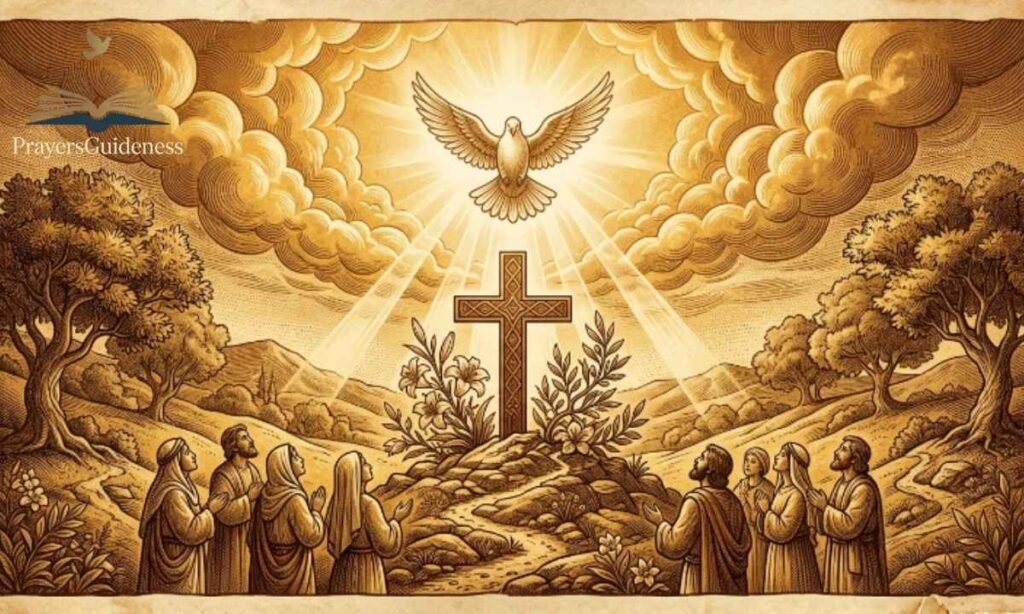
Deity as a Symbol of God’s Presence
Throughout Scripture, God’s deity is closely connected to His presence. When Moses encountered the burning bush, he stood on holy ground not because the ground changed, but because the divine presence of God made it sacred. It is not distant or abstract. In the Bible, it is personal and near.
Psalm 139:7-8 says: “Where can I go from your Spirit? Where can I flee from your presence?” God’s divine nature means He is always present, always aware, and always at work in your life.
Spiritual Significance of God’s Divine Nature
Understanding God’s divine nature transforms how you see yourself and the world. When you recognize that you are known by an all-knowing God, cared for by an all-powerful God, and guided by an ever-present God, fear begins to shrink and faith begins to grow.
The spiritual significance of deity is this: you are not alone. You are not forgotten. The God of all creation sees you, knows you, and loves you completely.
How Deity Strengthens Faith and Trust in God?
Many people struggle with doubt and fear because they have a small view of God. But when you begin to understand the fullness of His divine nature, His sovereignty, His love, His unchanging character, your faith becomes unshakeable.
Hebrews 11:6 reminds us: “Without faith it is impossible to please God.” And that faith grows when it is rooted in a true understanding of who God is. His deity is not just a theological fact. It is the anchor for your soul in every storm of life.
Deity of Jesus Christ in the Bible
Proof of Jesus’ Deity in Scripture
The biblical case for Jesus’ deity is overwhelming. The evidence comes from multiple angles:
• Divine names: Jesus is called God (John 20:28), Lord (Philippians 2:11), and Savior (Titus 2:13)
• Divine attributes: He is eternal (John 8:58), all-knowing (Matthew 16:21), all-powerful (John 11:38-44), and present everywhere (Matthew 28:20)
• Divine works: He created all things (John 1:3), forgave sins (Mark 2:5-7), raised the dead (John 11:43), and rose Himself (Romans 1:4)
• Worship received: Jesus accepted worship from Thomas (John 20:28), the disciples (Matthew 28:17), and angels (Hebrews 1:6)
Each of these points, taken alone, is significant. Taken together, they form an undeniable portrait of God’s true divine nature.
Why Christians Believe Jesus Is Divine?
Christians believe in the deity of Jesus not because of church tradition alone, but because Scripture consistently and clearly presents Him as fully God. The apostle Paul wrote in Philippians 2:6 that Jesus, “being in very nature God, did not consider equality with God something to be used to his own advantage.”
This is the heart of the gospel: God did not send a representative. He came Himself in the person of Jesus Christ to rescue humanity. Only a divine Savior could accomplish what sin and death demanded.
The Deity of Christ in Christian Theology
The deity of Christ is not a secondary doctrine. It is central to all of Christian theology. Without it, the Atonement is meaningless; a mere man cannot pay the infinite debt of human sin. Without it, the Resurrection is only a miracle, not a victory over death itself.
The Nicene Creed (325 AD) declared Jesus to be “God from God, Light from Light, true God from true God, begotten, not made, of one Being with the Father.” This has been the consistent confession of the Church throughout history.
Deity Meaning in Christianity

Understanding God’s Nature in Christian Belief
Christianity teaches that God is one divine being infinite, personal, holy, and loving. He is not an impersonal force or a distant watchmaker. He is the living God who speaks, acts, and relates to His people. This is what makes Christianity unique among world religions. The God of the Bible is not just powerful. He is personal.
The Connection Between Deity and Salvation
Salvation is only possible because of God’s deity. If Jesus were merely human, His death on the cross would be no different from any other martyr’s death. But because He is fully God, His sacrifice carries infinite worth enough to atone for the sins of all humanity throughout all time.
Romans 5:8 says: “God demonstrates his own love for us in this: While we were still sinners, Christ died for us.” The fact that it was God Himself who died for us that is the power of deity applied to salvation.
Deity and Worship in the Christian Faith
True Christian worship is rooted in a proper understanding of God’s divine nature. You cannot genuinely worship someone you do not know. When believers understand that they are worshipping the Creator of the universe the all-knowing, all-powerful, ever-present God worship moves from routine to reverence.
Revelation 4:11 captures this perfectly: “You are worthy, our Lord and God, to receive glory and honor and power, for you created all things.” Deity is the reason for worship.
Deity in Daily Life and Spiritual Experience
Recognizing God’s Presence in Everyday Life
God’s deity is not confined to Sunday morning church services. His divine presence fills every moment of every day. When you feel peace that has no natural explanation, that is the presence of a divine God. When you sense guidance in a difficult decision, that is the Spirit of the living God at work.
Jeremiah 29:13 promises: “You will seek me and find me when you seek me with all your heart.” The deity of God means He is always available, always accessible, and always near.
Growing Spiritually Through Knowing God
Spiritual growth does not happen in isolation from God’s nature. The more clearly you understand who God is, the more naturally your character begins to reflect His. You become more patient because He is patient. You become more loving because He is love. You become more truthful because He is truthful.
2 Peter 1:3 says: “His divine power has given us everything we need for a godly life through our knowledge of him.” Knowing God’s divine nature is the fuel for spiritual transformation.
How Prayer Deepens Your Understanding of Deity?
Prayer is one of the most powerful tools for deepening your understanding of God’s divine nature. When you bring your fears to an all-knowing God, you experience His wisdom. When you bring your weakness to an all-powerful God, you experience His strength. When you bring your loneliness to an ever-present God, you experience His comfort.
Every time you pray and see God work, your understanding of His deity grows deeper and your faith grows stronger.
You may also find spiritual depth in exploring how names carry divine meaning in Scripture. Read this insightful piece on the Tristan Name Meaning Bible to discover how God works through names and identity.
Deity Meaning in the Bible KJV
Important KJV Scriptures About Deity
The King James Bible uses the term “Godhead” to describe what modern translations call “deity.” These three KJV passages are foundational:
• Acts 17:29 (KJV) “Forasmuch as much as we are the offspring of God, we ought not to think that the Godhead is like unto gold, or silver, or stone, graven by art and man’s device.”
• Romans 1:20 (KJV) “For the invisible things of him from the creation of the world are clearly seen, being understood by the things that are made, even his eternal power and Godhead.”
• Colossians 2:9 (KJV) “For in him dwelleth all the fulness of the Godhead bodily.”
These three verses cover the foundation of deity: God’s nature is incomparable (Acts 17:29), knowable through creation (Romans 1:20), and fully present in Jesus Christ (Colossians 2:9).
Differences Between Modern and KJV Interpretations
The core meaning of deity and Godhead is identical in both modern and KJV translations. The difference is linguistic, not theological. Modern versions (NIV, ESV, NASB) use “deity” or “divine nature” for clarity. The KJV uses “Godhead,” an older English term with the same theological weight.
Neither version changes the truth. God’s divine nature is absolute, unchanging, and clearly revealed throughout all translations of Scripture.
Common Misunderstandings About Deity
Is Deity the Same as God?
Deity and God are closely related but not identical in meaning. God is a name or title for the divine being, while His nature and essence describe what He truly is. Think of it this way: God is the person; deity is His divine nature.
When we say Jesus shares fully in the nature and essence of God, we mean He is not a separate God but the same divine being as the Father, distinct in person yet united in essence.
Deity vs Divinity Explained
Deity and divinity are often used interchangeably, but there is a subtle distinction worth knowing:
• Deity refers to the full, complete nature of being God. It is absolute and total you either are God or you are not.
• Divinity can refer to divine qualities, characteristics, or origins. Angels, for example, are divine beings but do not possess deity; they are not God.
In biblical theology, only the Father, Son, and Holy Spirit possess the full nature of God. Everything else in creation, no matter how glorious, falls short of that divine essence.
Misconceptions About the Trinity and God’s Nature
Many people misunderstand the Trinity, which leads to confusion about deity. Here are three common misconceptions:
• Misconception 1: The Trinity means three gods. Truth: The Trinity is one God in three persons, one divine nature, three distinct persons.
• Misconception 2: Jesus became God at His resurrection or baptism. Truth: Jesus was God from eternity, long before the Incarnation (John 1:1, Micah 5:2).
• Misconception 3: The Holy Spirit is a lesser deity. Truth: The Holy Spirit is co-equal and co-eternal with the Father and Son, fully sharing in the one divine nature.
Practical Lessons and Faith Insights

Lessons Christians Can Learn About God’s Nature
Understanding God’s deity is not just academic. It produces real, life-changing lessons for every believer:
• God is trustworthy because His nature never changes (Malachi 3:6).
• God is capable because His power has no limit (Jeremiah 32:17).
• God is present because His spirit fills the earth (Psalm 139:8).
• God is personal because He knows you by name (Isaiah 43:1).
These truths are not abstract. They are meant to be lived, felt, and experienced in your daily walk with God.
Trusting God’s Divine Plan
When life feels confusing or painful, trusting God’s divine plan requires a firm understanding of His deity. A God who is not fully sovereign cannot be fully trusted. A God who is not eternal cannot promise eternal life. A God who is not all-knowing cannot promise that “all things work together for good” (Romans 8:28).
His deity is the reason you can trust His plan even when you cannot see it.
Applying Biblical Truths About Deity in Daily Life
The knowledge of God’s divine nature is meant to move from your head to your heart to your hands. Here are practical ways to apply these truths:
• Pray with confidence you are speaking to an all-powerful God.
• Give generously you serve a God who owns everything and lacks nothing.
• Face fear boldly the God of all creation is with you (Isaiah 41:10).
• Love others deeply you reflect the nature of a God who is love (1 John 4:8).
Deity is not just a doctrine to believe. It is a reality to live.
Numbers in the Bible also carry profound divine significance. Explore the 444 Meaning in the Bible and discover how God speaks through Scripture in ways that go beyond words alone.
Frequently Asked Questions
What Does Deity Mean Biblically?
Biblically, deity means the complete divine nature of God His eternal power, perfect holiness, and absolute sovereignty. It describes the essence of who God is, not merely what He does.
Is Jesus Part of the Godhead?
Yes. Colossians 2:9 (KJV) confirms that “all the fulness of the Godhead” dwells in Jesus bodily. He is the second person of the Trinity fully and completely God.
What Is the Difference Between Deity and Divinity?
Deity refers to the full, complete nature of being God. Divinity can describe divine qualities or origins in a broader sense. Only the triune God possesses full deity.
Why Is the Deity of Christ Important?
If Jesus is not fully God, then His death cannot save anyone from sin. The deity of Christ is the foundation of the gospel and the hope of every believer’s salvation.
What Does the Bible Say About God’s Divine Nature?
Romans 1:20 says God’s “eternal power and divine nature” are clearly seen through creation. Colossians 2:9 reveals that this divine nature dwells fully in Jesus Christ.
Conclusion
The deity meaning in the Bible is not a complicated idea reserved for theologians. It is a living truth meant for every believer. God is not a distant force or a vague spiritual concept. He is the eternal, all-powerful, ever-present Creator who stepped into human history in the person of Jesus Christ to bring you back to Himself.
When you understand God’s divine nature, everything changes how you pray, how you trust, how you worship, and how you live. Let this truth anchor your soul: the God of all deity knows your name, holds your future, and loves you completely.

2 thoughts on “Deity Meaning in the Bible: Understanding God’s Divine Nature ”