
If you’ve ever read through the Bible and stumbled across the word “eunuch,” you probably paused and wondered what it really means. It’s one of those biblical terms that sounds foreign to modern ears, yet it appears dozens of times across both the Old and New Testaments. Understanding what a eunuch means in the Bible opens a window into ancient history, royal courts, and most importantly the heart of God toward people that society pushed to the margins.
This guide covers everything you need to know: the original Hebrew and Greek words, the three types of eunuchs Jesus described, the most famous eunuchs in Scripture, and what this topic means for your faith today. Whether you’re a lifelong Bible student or just getting started, you’re in the right place.
What Does Eunuchs Mean in the Bible?
A eunuch in the Bible generally refers to a man who was castrated, born without the ability to reproduce, or in some cases a person who simply held a royal court title without any physical alteration. The term carries both a physical and a figurative meaning depending on the context and the original language.
The most straightforward definition is a male who was physically castrated and rendered unable to reproduce typically so he could serve in a position of total loyalty to a king or ruler. But the word goes deeper than that, especially when Jesus uses it in the New Testament.
The Hebrew Word for Eunuch Saris
In the Old Testament, the Hebrew word for eunuch is saris (also spelled cariyc). It appears 45 times throughout the Hebrew scriptures. Interestingly, saris carries two distinct meanings:
- A man who has been physically castrated or emasculated
- A royal official or court officer who held a position of authority and trust
This dual meaning creates some fascinating interpretive challenges. For example, Potiphar the Egyptian official who purchased Joseph is called a saris in Genesis 37:36. Yet Potiphar had a wife, which suggests he was not physically castrated but simply held an official court title. The word saris is also believed to be an Akkadian loanword from sa resi, meaning “one who stands at the head of the king.”
So when you read “officer” or “chamberlain” in some English translations of the Old Testament, the original Hebrew often says saris, the same word used for eunuch.
The Greek Word for Eunuch Eunouchos
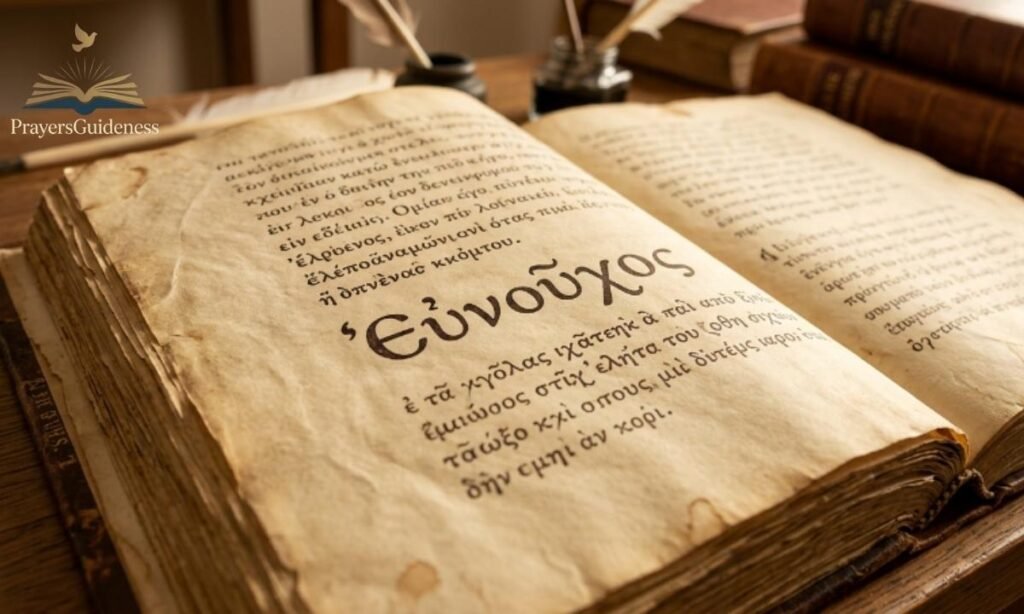
In the New Testament, the Greek word for eunuch is eunouchos. It comes from two Greek words: eune (bed) and ekhein (to keep or hold). Literally, a eunuch was a “bed-keeper” , a man trusted to guard the bedchambers of royalty. The word eunouchos appears eight times in the New Testament.
Unlike the Hebrew saris, the Greek eunouchos more strongly implies physical castration. However, Jesus broadened the definition to include men who lived celibate lives by choice, which we’ll explore shortly.
The 3 Types of Eunuchs Jesus Identified in Matthew 19:12
One of the most important passages about eunuchs in the entire Bible comes directly from the lips of Jesus. In Matthew 19:12, He said:
“There are eunuchs who were born that way, and there are eunuchs who have been made eunuchs by others and there are those who choose to live like eunuchs for the sake of the kingdom of heaven. The one who can accept this should accept it.”
Jesus clearly identifies three distinct categories:
Type 1: Natural Eunuchs Born That Way
These are men born with a physical condition that prevents reproduction or eliminates sexual desire entirely. This could include men born without testicles (a condition medically known as cryptorchidism) or those born with hormonal deficiencies. Some scholars also suggest this category includes men who simply have no natural inclination toward marriage.
Type 2: Forced Eunuchs Made by Others
These are men who were physically castrated by another person most often rulers who wanted loyal servants without any risk of political ambition or sexual misconduct around the royal family. This was standard practice in ancient Babylon, Persia, Egypt, and Assyria.
Type 3: Voluntary Eunuchs For the Kingdom of Heaven
This third category is perhaps the most spiritually profound. Jesus speaks of men who willingly chose to live celibate, unmarried lives not because they were forced to, but because they wanted to give their whole lives to God’s work. The Apostle Paul fits this description perfectly, as he wrote in 1 Corinthians 7:7–9 that he chose to remain unmarried in order to serve the Lord without distraction.
Eunuchs in the Old Testament Roles, Restrictions, and God’s Redemption
What Role Did Eunuchs Play in Ancient Royal Courts?
In the ancient Near East, eunuchs were absolutely everywhere in royal life. Kings across Egypt, Babylon, Persia, Assyria, and Israel employed eunuchs in critical roles. Their physical condition made them uniquely trustworthy; they could not establish competing dynasties, and they had no sexual interest in the king’s harem. This made them ideal for:
- Guarding the royal harem and bedchambers
- Serving as personal attendants to the king or queen
- Holding high-ranking military or administrative positions
- Acting as trusted advisors and messengers
Why the Mosaic Law Restricted Eunuchs (Deuteronomy 23:1)
Under Old Testament law, a man who had been physically castrated was excluded from full participation in the assembly of God’s people. Deuteronomy 23:1 states plainly: “No one who has been emasculated by crushing or cutting may enter the assembly of the Lord.”
This restriction existed for two reasons. First, many pagan cultures practiced self-castration as an act of worship to false gods and God wanted to separate His people from that practice entirely. Second, physical wholeness was symbolically required for those who served Yahweh in priestly roles (Leviticus 21:16–20).
This meant that eunuchs regardless of how they came to be that way were pushed to the religious fringes of Israelite society.
God’s Powerful Promise to Eunuchs in Isaiah 56:3–5
Then something remarkable happens in Isaiah 56. God speaks a word of radical grace directly to eunuchs who were faithful to His covenant:
“Let not the eunuch say, ‘I am only a dry tree.’ For this is what the Lord says: ‘To the eunuchs who keep my Sabbaths, who choose what pleases me and hold fast to my covenant to them I will give a memorial and a name better than sons and daughters; I will give them an everlasting name that will endure forever.'”
This is stunning. God takes the very thing that defined a eunuch’s social shame having no descendants, no legacy, no name to carry forward and promises to give him something better than any biological family could provide. An everlasting name. A permanent place among God’s people.
The ban of Deuteronomy 23 was not the final word. God’s grace was already expanding long before the New Testament arrived.
Eunuchs in the New Testament Inclusion, Grace, and the Gospel
The Ethiopian Eunuch in Acts 8 A Story That Changed Everything
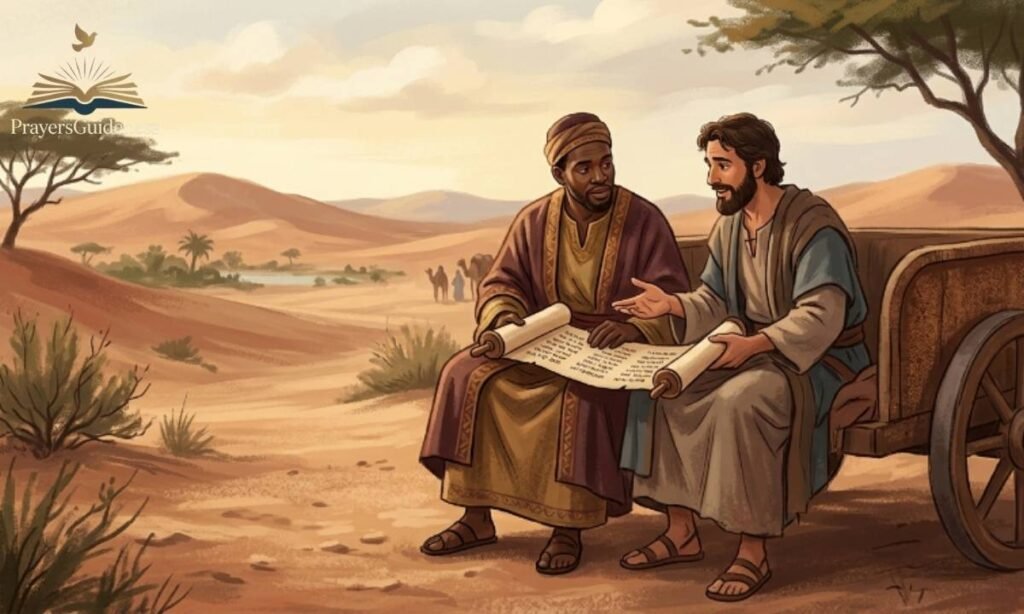
The most detailed and spiritually rich story of a eunuch in the New Testament appears in Acts 8:26–39. An angel directed Philip the Evangelist to travel on the desert road from Jerusalem to Gaza. There he found an Ethiopian man, a high official of Candace, queen of the Ethiopians seated in his chariot, reading the scroll of Isaiah aloud.
This man was wealthy, powerful, and educated. He had traveled a great distance to worship in Jerusalem. And yet, as a eunuch, the Old Testament law would have technically barred him from full participation in the assembly of God’s people. He was a man on the outside looking in.
Philip ran up to the chariot, explained the gospel from Isaiah 53, and the Ethiopian believed. His next words are among the most moving in all of Acts: “See, here is water! What prevents me from being baptized?” (Acts 8:36).
The answer was: nothing. Absolutely nothing.
Philip baptized him on the spot. The man went on his way rejoicing and tradition holds that he carried the gospel back to Ethiopia, making him one of the earliest missionaries in Christian history. This one conversion fulfilled Isaiah’s promise in a breathtaking way.
What Paul Taught About Celibacy and the “Eunuch” Life
The Apostle Paul, who chose to remain unmarried, embraced what Jesus described as the voluntary eunuch’s path. In 1 Corinthians 7:7–9, he wrote that singleness is a gift from God not a punishment or a lesser state, but a calling that frees a person to focus entirely on God’s work.
Paul never forced this choice on others. He simply said that for those who are called to it, unmarried life carries unique spiritual advantages. This teaching directly builds on what Jesus said in Matthew 19.
Famous Eunuchs Mentioned in the Bible
Several notable figures throughout Scripture are identified as eunuchs or carry the Hebrew term saris:
| Name | Book | Role |
| Potiphar | Genesis 37:36 | Egyptian court official; bought Joseph |
| Ashpenaz | Daniel 1:3 | Chief eunuch over Daniel in Babylon |
| Hegai | Esther 2:3 | Eunuch in charge of the royal harem; favored Esther |
| Shaashgaz | Esther 2:14 | King’s eunuch over the concubines |
| Ebed-Melech | Jeremiah 38:7–13 | Ethiopian eunuch who rescued Jeremiah from a cistern |
| The Ethiopian Eunuch | Acts 8:27 | Treasurer of Candace, queen of Ethiopia; baptized by Philip |
| Seven Eunuchs of Xerxes | Esther 1:10 | Mehuman, Biztha, Harbona, Bigtha, Abagtha, Zethar, Karkas |
Was Daniel a Eunuch in Babylon?
This is one of the most frequently asked questions about eunuchs in the Bible. When Nebuchadnezzar conquered Jerusalem, he commanded Ashpenaz, his chief eunuch, to select young men from royal Israelite families for palace service. Daniel, Hananiah, Mishael, and Azariah were among those chosen (Daniel 1:3–6).
Many Bible scholars believe the prophecy in Isaiah 39:7 where God told Hezekiah that his descendants would become eunuchs in Babylon finds its fulfillment in Daniel and his companions. While the text does not explicitly say Daniel was castrated, the circumstantial evidence is strong, and many trusted theologians have concluded he likely was.
Ebed-Melech The Forgotten Hero
Of all the eunuchs in Scripture, Ebed-Melech may be the most underappreciated. When the prophet Jeremiah was thrown into a muddy cistern to die, it was this Ethiopian eunuch who went to King Zedekiah, argued for Jeremiah’s life, and physically pulled him out with ropes (Jeremiah 38:7–13). God later rewarded Ebed-Melech with a direct promise of personal protection because of his faithful courage (Jeremiah 39:15–18).
What “Eunuch for the Kingdom of Heaven” Really Means Today
The phrase “eunuch for the kingdom of heaven” from Matthew 19:12 is perhaps the most misunderstood verse connected to this topic. Jesus was not commanding men to physically castrate themselves. He was pointing to a spiritual reality that some people are called to set aside marriage, family, and personal legacy so they can pour every ounce of their energy into advancing God’s kingdom.
This applies to missionaries who serve in unreached regions. It applies to pastors who give everything to their congregation. It applies to every believer who has felt a pull to put God’s work before personal comfort. The eunuch, in this sense, becomes a model of radical devotion.
What the Bible Teaches About God’s Heart for the Marginalized?
Here is the theological thread that runs through every eunuch story in Scripture: God consistently welcomes those that society rejects.
The movement in the Bible is unmistakable from Deuteronomy’s restriction, to Isaiah’s promise, to the Ethiopian eunuch’s baptism in Acts. At every step, God is drawing the circle wider. The eunuch who was excluded from the assembly is now baptized and rejoicing. The man who feared he would have no lasting name is given an everlasting one.
Galatians 3:28 says it plainly: “There is neither Jew nor Gentile, neither slave nor free, nor is there male and female, for you are all one in Christ Jesus.” The old categories that divided people including physical wholeness no longer determine access to God.
Common Misconceptions About Eunuchs in the Bible
Does the Bible Condemn Being a Eunuch?
No. While Old Testament law restricted eunuchs from certain religious roles, the Bible never condemns a person for being a eunuch. In fact, God’s Word consistently extends grace and honor to faithful eunuchs. The restrictions in Deuteronomy were about ceremonial cleanness not moral condemnation.
Is a Eunuch the Same as a Homosexual in the Bible?
No. Eunuchs and homosexuals are never used interchangeably in Scripture. Jesus described eunuchs in terms of their physical condition or their choice of celibacy not sexual attraction. The attempt by some modern interpreters to read homosexuality into the “born eunuchs” category does not align with the biblical or historical context of the term.
Was Paul a Eunuch?
Paul was not a physical eunuch. However, he chose to live as a voluntary eunuch in the sense Jesus described celibate, unmarried, and wholly devoted to apostolic ministry. Paul himself acknowledged this in 1 Corinthians 7:7–9 and presented it as a gift, not a burden.
Key Bible Verses About Eunuchs
- Deuteronomy 23:1 The Old Testament restriction on eunuchs entering the assembly
- Isaiah 56:3–5 God’s promise of an everlasting name to faithful eunuchs
- Matthew 19:12 Jesus describes three types of eunuchs
- Acts 8:26–39 The conversion and baptism of the Ethiopian eunuch
- Daniel 1:3–9 Daniel and companions placed under the chief eunuch Ashpenaz
- Esther 2:3, 4:4 Eunuchs serving in the Persian royal court
- Jeremiah 38:7–13 Ebed-Melech rescues Jeremiah
Why Eunuchs Still Matter to Christians Today?
You might wonder why a topic like this is relevant to someone sitting in a church pew or reading their Bible in 2025. The answer is simpler than you think. The eunuch’s story is for anyone who has ever felt excluded, insufficient, or outside the boundaries of God’s blessing.
If you feel like a “dry tree” , someone who has nothing to offer, no legacy to leave, no place at the table, Isaiah 56 was written for you. If you have chosen to pour your life into God’s work rather than building your own family, Matthew 19:12 dignifies that calling. And if you are wondering whether someone like you could truly be welcomed by God, the Ethiopian eunuch’s story in Acts 8 gives you your answer.
Nothing prevented his baptism. Nothing prevents yours.
Frequently Asked Questions
How many times is the word eunuch mentioned in the Bible?
The Hebrew word saris appears 45 times in the Old Testament, while the Greek eunouchos and its forms appear eight times in the New Testament, making the topic far more significant than most readers realize.
Who is the most famous eunuch in the Bible?
The Ethiopian eunuch from Acts 8 is likely the most well-known, as his baptism by Philip marks a pivotal moment in the spread of the gospel beyond Jewish boundaries. Ebed-Melech, who saved Jeremiah, is another standout figure.
Did being a eunuch exclude someone from heaven?
Not at all. Isaiah 56:4–5 explicitly promises faithful eunuchs an everlasting name and a permanent place among God’s people. The Ethiopian eunuch’s baptism in Acts 8 further confirms that physical condition has no bearing on salvation.
What does “eunuch for the kingdom of heaven” mean in simple terms?
It refers to someone who voluntarily chooses to remain celibate and unmarried in order to dedicate their full life to serving God, not someone who is physically altered.
Was the ban on eunuchs ever lifted in the Bible?
Yes. The Old Testament restriction of Deuteronomy 23:1 was later overturned by God’s promise in Isaiah 56:3–5, and fully realized in the New Testament through the inclusion of the Ethiopian eunuch in Acts 8 and Jesus’ teaching in Matthew 19.
Conclusion
The word eunuch in the Bible is far richer, more layered, and more spiritually significant than most people expect. From court officials in Persia to the man baptized on a desert road in Acts, eunuchs appear at critical moments in redemptive history and God always shows up for them with grace rather than condemnation.
What the Bible ultimately teaches through these stories is this: no physical condition, no social label, and no past exclusion can separate a faithful heart from God’s love. The eunuch who feared he was a “dry tree” was promised an everlasting name and that same promise echoes into your life today.