

Prayer is one of the most intimate and transformative acts a believer can engage in. It is not a ritual or a religious performance it is a real, living conversation between a human soul and the God who created it. Throughout the pages of Scripture, from Genesis to Revelation, men and women poured out their hearts before God in ways that changed history, moved mountains, brought fire from heaven, and raised the dead.
The Bible is the greatest prayer book ever written. It is filled with examples of people just like us broken, afraid, confused, grieving, and desperate who turned to God and found that He was listening every single time. These biblical prayers are not just ancient words from another era. They are living, breathing models of how faith speaks to God, and they carry just as much power today as the day they were first prayed.
In this article, we explore the 30 most powerful prayers in the Bible. Each one is tied to a real person, a real moment, and a real encounter with God. Whether you are seeking healing, guidance, forgiveness, strength, or a breakthrough, there is a prayer here for you. Let these sacred words of Scripture light the path of your own prayer life and deepen your walk with God.
Prayer for the World — The Lord’s Prayer

“Our Father in heaven, hallowed be Your name. Your kingdom comes, Your will be done, on earth as it is in heaven.” — Matthew 6:9–10
The Lord’s Prayer is the most well-known prayer in all of human history. Jesus gave it to His disciples during the Sermon on the Mount when they asked Him directly, “Lord, teach us to pray.” In just a few sentences, Jesus laid out a complete framework for how every believer should approach God.
This prayer is powerful because it covers every dimension of the human relationship with God. It begins with worship “hallowed be Your name.” It moves into submission “Your will be done.” It addresses daily needs “give us this day our daily bread.” It covers forgiveness both receiving it and extending it to others. And it ends with a declaration of God’s eternal kingdom and glory.
What makes this prayer extraordinary is not just what it says, but what it teaches. It shows us that prayer is not only about asking for things. It is about aligning our hearts with God’s heart, surrendering our agenda to His, and trusting that He is both willing and able to provide everything we need. Praying the Lord’s Prayer regularly is one of the most spiritually grounding practices a believer can develop.
Prayer for Others — Jesus’ Prayer for His Disciples
“I pray for them. I am not praying for the world, but for those You have given me, for they are Yours.” — John 17:9
Before He was arrested, Jesus gathered His disciples for one final meal and then lifted His voice to heaven in the most tender and personal prayer recorded in the Gospels. He prayed for His disciples by name not for the crowds, not for miracles, but for the people He had walked with, eaten with, and loved deeply.
Jesus asked the Father to protect them, to sanctify them in truth, and to keep them united in love. This prayer reveals the heart of Jesus as the Great Intercessor someone who stands before God and pleads on behalf of those He loves. It is also a model for how we should pray for the people God places in our lives.
This prayer reminds us that intercession praying on behalf of someone else is one of the highest forms of love we can express. When we pray for others, we are doing exactly what Jesus did on the night before He died.
Prayer for Unity — Jesus’ High Priestly Prayer in John 17
“I pray also for those who will believe in me through their message, that all of them may be one, Father, just as You are in me and I am in You.” — John 17:20–21
Later in the same prayer in John 17, Jesus looked beyond His disciples to every person who would ever believe in Him including you and me. He prayed specifically for unity among all believers across all generations. This is one of the most breathtaking moments in all of Scripture.
Jesus was not praying for uniformity or that everyone would look the same. He was praying for the same kind of deep, loving, self-giving unity that exists within the Trinity itself. This is the standard God set for the church not just getting along, but being genuinely one in purpose, love, and mission.
This prayer also carries an evangelistic vision: Jesus said that when believers are united, the world will know that God sent Him. Unity in the body of Christ is not just a feel-good goal. It is a powerful testimony to a watching world.
Prayer for Obedience — Jesus’ Prayer in Gethsemane
“My Father, if it is possible, may this cup be taken from me. Yet not as I will, but as You will.” — Matthew 26:39
The Garden of Gethsemane prayer is one of the most emotionally raw and spiritually profound prayers in the entire Bible. Jesus, fully God and fully human, knelt in the garden the night before His crucifixion and prayed with such intensity that Luke records He sweat drops of blood.
He did not pretend He was not in pain. He did not perform strength He did not feel. He honestly told the Father what He was feeling “if it is possible, let this cup pass from me.” And then, in the very next breath, He surrendered completely “not my will, but Yours be done.”
This prayer teaches us perhaps the most important lesson in the Christian life: true obedience is not the absence of struggle. It is choosing God’s will over your own even when it costs everything. When you do not understand what God is doing and the road ahead is painful, Gethsemane gives you permission to be honest with God while still choosing to trust Him.
Prayer of Praise — Mary’s Magnificat
“My soul glorifies the Lord and my spirit rejoices in God my Savior, for He has been mindful of the humble state of His servant.” — Luke 1:46–48
When the angel Gabriel told Mary she would carry the Son of God, she responded with one of the most beautiful expressions of praise in all of Scripture the Magnificat. This prayer is a song of worship that pours from a heart overwhelmed by God’s grace.
Mary praised God not just for what He was doing for her personally, but for what it meant for the whole world. She celebrated His mercy, His faithfulness to His promises, and His ability to lift up the humble and bring down the proud. Her prayer shows the posture of a soul that has fully received the grace of God and cannot help but worship.
The Magnificat reminds us that praise is not something we work up emotionally. It is the natural overflow of a heart that has truly seen who God is. When we understand what He has done for us, praise becomes the most natural response in the world.
Prayer of Thanksgiving — Paul’s Prayer for the Thessalonians
“We always thank God for all of you and continually mention you in our prayers.” — 1 Thessalonians 1:2
The Apostle Paul began nearly every letter he wrote with a prayer of thanksgiving. His prayer for the Thessalonians is a beautiful model of how to give thanks to God for the people in our lives. Paul thanked God for their faith, their love, and their endurance three marks of a healthy and growing spiritual life.
What stands out about this prayer is that Paul thanked God for the Thessalonians rather than just complimenting them directly. He understood that every good thing in their lives was ultimately a gift from God. This is a spiritually mature perspective — one that gives God credit for the fruit He produces in others.
This prayer challenges us to cultivate a lifestyle of gratitude that regularly names specific people before God and gives Him thanks for the work He is doing in them.
Prayer for Revival — Elijah’s Prayer on Mount Carmel
“Answer me, Lord, answer me, so these people will know that You, Lord, are God, and that You are turning their hearts back again.” — 1 Kings 18:37
Few moments in the Old Testament are as dramatic as the showdown on Mount Carmel. The prophet Elijah stood alone against 450 prophets of Baal on a mountain before all of Israel. After the prophets of Baal cried out to their god for hours with no answer, Elijah stepped forward and prayed one of the shortest and most powerful prayers in Scripture.
He did not pray a long or elaborate prayer. He asked God to answer him not for his own glory, but so that the people of Israel would turn their hearts back to the living God. Fire fell from heaven immediately, consuming the sacrifice, the altar, the water, and the stones. The people fell on their faces and declared, “The Lord, He is God.”
This prayer teaches us that bold, faith-filled prayer is not about the length of the words but the depth of the trust behind them. Elijah prayed with a single focus: God’s glory and the revival of God’s people. When our prayers carry that same focus, heaven takes notice.
Prayer for Forgiveness — David’s Prayer of Repentance
“Have mercy on me, O God, according to Your unfailing love; according to Your great compassion blot out my transgressions.” — Psalm 51:1
Psalm 51 is one of the most honest and heart-wrenching prayers in the entire Bible. David wrote it after the prophet Nathan confronted him about his adultery with Bathsheba and his arrangement of her husband Uriah’s death. He had sinned deeply, and he knew it.
What makes this prayer so powerful is its complete honesty before God. David did not make excuses. He did not minimize what he had done. He threw himself entirely on the mercy of God and asked for something he knew he did not deserve complete forgiveness and a clean heart.
“Create in me a pure heart, O God, and renew a steadfast spirit within me” (Psalm 51:10). This line has become one of the most prayed verses in all of Scripture. It is a prayer of radical dependence an acknowledgment that we cannot clean ourselves and that only God can make us truly new.
Prayer of Repentance — The Prodigal Son’s Return to the Father
“Father, I have sinned against heaven and against you. I am no longer worthy to be called your son.” — Luke 15:21
The parable of the prodigal son is one of the most beloved stories Jesus ever told. After squandering his inheritance in reckless living, the younger son came to his senses in a pig pen and decided to return to his father. He rehearsed a simple prayer of repentance on the long road home.
He did not try to negotiate. He did not come back with a list of achievements to prove his worth. He simply came with a broken spirit and an honest confession. What happened next is one of the greatest pictures of God’s grace in all of literature: his father ran to meet him while he was still a long way off.
This prayer models the most essential posture of repentance humility without hopelessness. It tells us that the moment we turn toward God with a sincere heart, He is already running toward us.
Prayer for Confession — Daniel’s Prayer of National Repentance
“We have sinned and done wrong. We have been wicked and have rebelled; we have turned away from Your commands and laws.” — Daniel 9:5
Daniel 9 contains one of the most comprehensive and spiritually mature prayers of confession in the entire Bible. Daniel was a righteous man one of the few people in Scripture of whom no sin is recorded. Yet when he prayed this prayer, he did not separate himself from his people. He said “we have sinned,” not “they have sinned.”
This is the spirit of intercessory confession standing in the gap for an entire community, nation, or generation, and owning collective sin before God. Daniel humbled himself, fasted, and wore sackcloth as he poured out this prayer. He appealed not to Israel’s righteousness but entirely to God’s mercy and forgiveness.
This prayer shows us that confession is not just personal. Sometimes God calls His people to stand before Him and humbly acknowledge the sins of their community, their nation, or their generation on behalf of those who will not confess themselves.
Prayer for Strength — Hannah’s Prayer of Surrender
“Lord Almighty, if You will only look on Your servant’s misery and remember me, and not forget Your servant but give her a son, then I will give him to the Lord for all the days of his life.” — 1 Samuel 1:11
Hannah’s prayer is one of the most powerful examples of faith under pressure in all of Scripture. She was barren in a culture where a woman’s worth was often measured by her ability to bear children. Year after year, her pain deepened. Year after year, she prayed.
What makes her prayer extraordinary is the vow attached to it. She did not just ask God for a son to fill her own emptiness. She asked for a son and immediately promised to give him back to God for His purposes. This is the surrender at the heart of true faith receiving from God not to keep for yourself, but to steward for His glory.
God heard Hannah’s prayer and she conceived. The son she bore, Samuel, became one of the greatest prophets in Israel’s history. Her story reminds us that when we bring our deepest longings to God with open hands rather than clenched fists, He moves in ways that go far beyond what we could have imagined.
Prayer for Courage — Nehemiah’s Prayer Before the King
“Lord, let Your ear be attentive to the prayer of this Your servant and to the prayer of Your servants who delight in revering Your name. Give Your servant success today by granting him favor in the presence of this man.” — Nehemiah 1:11
Nehemiah was a cupbearer to the Persian king Artaxerxes when he heard that Jerusalem’s walls were broken down. His heart broke, and he wept, fasted, and prayed for days. When the king noticed his sadness and asked what he wanted, Nehemiah prayed silently in that split second between the question and his answer before speaking.
This is one of the most practical prayer moments in the Bible. It was not a long prayer at an altar. It was a breath-prayer in a moment of high stakes. Nehemiah’s entire future and the future of Jerusalem hung on what he was about to say. He prayed quickly, trusted God completely, and then spoke.
The king not only gave Nehemiah permission to go he gave him letters of safe passage, supplies for the journey, and timber for the building. This prayer teaches us that we do not always have time to get on our knees. Sometimes the most powerful prayer is a moment of silent dependence on God right before we open our mouths.
Prayer for Perseverance — Job’s Prayer Through Suffering
“Though He slay me, yet will I hope in Him.” — Job 13:15
Job’s prayer life throughout his suffering is one of the rawest and most honest dialogues with God in all of Scripture. He lost his children, his wealth, his health, and the support of his closest friends. Yet through all of it, he never stopped talking to God.
Job’s prayers were not polished or religious-sounding. They were desperate, confused, and sometimes full of anguish. But they were always directed at God. He did not curse God and die as his wife suggested. He questioned, he wrestled, and he cried out but he never stopped believing that God was there and that God would answer.
The climax of Job’s story came when God spoke out of a whirlwind. Job’s prayers were answered not with explanations but with an encounter. He saw God clearly, and that was enough. This prayer pattern of persistent, honest engagement with God even through suffering is one of the most powerful models of faith in the entire Bible.
Prayer for Boldness — Peter’s Prayer for the Early Church
“Now, Lord, consider their threats and enable Your servants to speak Your word with great boldness.” — Acts 4:29
After Peter and John were arrested and threatened by the religious leaders for preaching in Jesus’ name, they returned to the early church and led a prayer meeting. Instead of praying for safety or for their enemies to be silenced, they prayed for one thing: boldness to keep preaching.
This prayer reflects the radical courage of the early church. They were not naive about the danger they acknowledged the threats directly in their prayer. But their response to opposition was not retreat. It was more prayer and more boldness.
God answered immediately. Acts 4:31 records that the place where they were meeting was shaken and they were all filled with the Holy Spirit and spoke the word of God boldly. This prayer shows us that when we face opposition for our faith, the right response is not to play it safe but to ask God for the courage to stand even firmer.
Prayer for Wisdom — Solomon’s Request
“Give Your servant a discerning heart to govern Your people and to distinguish between right and wrong.” — 1 Kings 3:9
When God appeared to the young King Solomon in a dream and said “ask for whatever you want me to give you,” Solomon could have asked for anything wealth, long life, victory over his enemies. Instead, he asked for wisdom to lead God’s people well.
God was so pleased with this request that He gave Solomon not only wisdom but also the wealth and honor he had not asked for. Solomon’s prayer stands as one of the greatest examples of praying for the right things. He recognized that without God’s wisdom, all the power in the world was useless.
This prayer is a challenge to every believer who is about to take on a new responsibility a new job, a new role in ministry, a new season of leadership. Before you ask for anything else, ask God for wisdom. It is still the prayer that pleases God most.
Prayer for Guidance — Moses’ Prayer for God’s Presence
“If Your Presence does not go with us, do not send us up from here.” — Exodus 33:15
After the golden calf incident, when God threatened to send Israel to the Promised Land with an angel instead of His own presence, Moses refused to move. He planted his feet and told God plainly: if You are not going with us, we are not going anywhere.
This is one of the most theologically rich prayers in the Old Testament. Moses understood something that many believers miss: the destination means nothing without God’s presence on the journey. He would rather stay in the wilderness with God than enter the Promised Land without Him.
God honored this prayer and confirmed His presence would go with Israel. This prayer challenges us to examine what we value most. Are we more focused on where God can take us, or on simply being with Him wherever the road leads?
Prayer for Spiritual Strength — Paul’s Prayer for the Ephesians
“I pray that out of His glorious riches He may strengthen you with power through His Spirit in your inner being.” — Ephesians 3:16
Paul’s prayer in Ephesians 3:14–21 is widely regarded as one of the most theologically rich and spiritually powerful prayers in the New Testament. Paul prayed that believers would be strengthened in their inner being by the Holy Spirit, that Christ would dwell in their hearts through faith, and that they would grasp the full dimensions of God’s love.
He concluded with one of the most breathtaking doxologies in Scripture: “Now to him who is able to do immeasurably more than all we ask or imagine, according to his power that is at work within us, to him be glory in the church and in Christ Jesus throughout all generations, for ever and ever!” (Ephesians 3:20–21).
This prayer is a model for how we should pray for spiritual depth not just for outward blessings or physical needs, but for the inner transformation that comes when Christ truly dwells in us by faith.
Prayer for Blessing — Jabez’s Bold Request to God
“Oh, that You would bless me and enlarge my territory! Let Your hand be with me, and keep me from harm so that I will be free from pain.” — 1 Chronicles 4:10
Jabez appears in just two verses of Scripture, but his prayer has captured the hearts of believers for generations. He was a man whose name literally meant “pain,” born in difficult circumstances. Yet he refused to let his origins define his destiny. He cried out to God for blessing, expansion, and protection and the Bible records that God granted his request.
This prayer is bold, specific, and expectant. It asks God for four things: blessing, expanded influence, divine guidance, and protection from harm. What makes it especially powerful is the trust behind it. Jabez did not try to manipulate God or approach Him with a transaction. He simply poured out his heart and trusted God to respond according to His goodness.
The story of Jabez teaches us that God is not offended by big prayers. He is honored when His children come to Him with expectant, trusting hearts that believe He is both willing and able to bless.
Prayer for Breakthrough — Elijah’s Prayer for Rain
“Elijah was a human being, even as we are. He prayed earnestly that it would not rain, and it did not rain on the land for three and a half years. Again he prayed, and the heavens gave rain.” — James 5:17–18
After the dramatic victory on Mount Carmel, Elijah climbed to the top of the mountain and began praying for rain to end the three-and-a-half-year drought he had prophesied. He bowed down to the ground, put his face between his knees, and sent his servant to look toward the sea seven times before a small cloud appeared.
This prayer is a powerful model of persistent, faith-filled intercession. Elijah did not stop after one prayer or even six. He kept praying until the breakthrough came. When the servant finally saw a small cloud the size of a man’s hand, Elijah declared that the rain was coming before a single drop had fallen.
The book of James uses this story as the central illustration for why the persistent, earnest prayer of a righteous person is powerful and effective. Elijah was not a superhuman. He was a man just like us, prone to fear and discouragement. Yet his persistent prayer moved the heavens.
Prayer for a Miracle — Elisha’s Prayer to Open Blind Eyes

“Open his eyes, Lord, so that he may see.” — 2 Kings 6:17
When the king of Aram surrounded the city of Dothan with horses and chariots to capture Elisha, the prophet’s servant woke up in terror. Elisha’s response was one of the most remarkable in Scripture: he prayed a simple, direct prayer asking God to open his servant’s eyes to see the spiritual reality around them.
When God answered, the servant saw the hills full of horses and chariots of fire the armies of heaven surrounding and protecting Elisha. The threat had not changed. The danger was real. But the servant’s perspective was completely transformed by one short prayer.
This prayer reminds us that the unseen spiritual world is more real and more powerful than what our natural eyes can see. When we face situations that seem impossible or overwhelming, we can pray the same prayer Elisha prayed “Lord, open my eyes” and trust God to show us that He is greater than anything arrayed against us.
Prayer for Healing — Elisha’s Prayer for the Shunammite’s Son

“Then he got on the bed and lay on top of the boy, mouth to mouth, eyes to eyes, hands to hands. As he stretched himself out on him, the boy’s body grew warm.” — 2 Kings 4:34
The Shunammite woman had shown great hospitality to the prophet Elisha, building him a room in her home. God blessed her with a son as a reward. Years later, that son died suddenly. She went directly to Elisha, and he went to the boy’s room, prayed to God, and stretched himself over the child.
The child sneezed seven times and opened his eyes. This was a full resurrection one of the most dramatic miracles in the Old Testament. At the center of this miracle was Elisha’s prayer a prayer of complete dependence on God’s power to do what was humanly impossible.
This prayer teaches us that healing prayer requires both faith and action. Elisha did not simply speak a word from a distance. He went to the place of the need, he engaged fully, and he trusted God to do what only He could do.
Prayer for Healing — Hezekiah’s Prayer on His Sickbed
“Remember, Lord, how I have walked before You faithfully and with wholehearted devotion and have done what is good in Your eyes.” — 2 Kings 20:3
When the prophet Isaiah told King Hezekiah to put his house in order because he was going to die, Hezekiah did not simply accept the verdict. He turned his face to the wall and wept bitterly before God, crying out for healing and reminding God of his faithfulness.
Before Isaiah had even left the middle court of the palace, God sent him back with a new message: Hezekiah’s prayer had been heard, and God would add fifteen years to his life. This is one of the most striking examples of answered prayer in the entire Bible a medical death sentence reversed because a man dared to bring his case before God.
Hezekiah’s prayer teaches us that the word of God through human beings is not always the final word. When we bring our deepest needs to God in honest, heartfelt prayer, He is fully capable of reversing what seemed irreversible.
Prayer for Restoration — Joel’s Prayer for God’s Mercy
“Spare Your people, Lord. Do not make Your inheritance an object of scorn, a byword among the nations.” — Joel 2:17
The prophet Joel called the people of Israel to a season of fasting, weeping, and prayer in response to a devastating plague of locusts that had stripped the land bare. His prayer was a passionate cry for God to spare His people and restore what had been destroyed.
God’s response in Joel 2:25 is one of the most precious promises in all of Scripture: “I will repay you for the years the locusts have eaten.” This restoration promise has brought hope to millions of believers who have walked through devastating seasons of loss.
Joel’s prayer teaches us that the right response to national or personal devastation is not despair but deep, earnest, communal prayer. When we cry out to God for restoration with sincere hearts, He promises to restore and His restoration always exceeds what was originally lost.
Prayer for Protection — David’s Cry in Psalm 91
“He who dwells in the shelter of the Most High will rest in the shadow of the Almighty. I will say of the Lord, ‘He is my refuge and my fortress, my God, in whom I trust.'” — Psalm 91:1–2
Psalm 91 is one of the most beloved and most frequently prayed chapters in the entire Bible. It is a prayer and declaration of protection that covers every kind of danger the terror of night, the arrow that flies by day, pestilence, destruction, and the attacks of spiritual enemies.
David wrote from personal experience. He had faced lions, bears, giants, and armies. He knew what it was to need divine protection at every level. And through it all, he had discovered that there was a place of absolute safety dwelling in the presence of God.
This prayer reminds us that God’s protection is not passive. It is active, personal, and complete. When we make God our dwelling place and declare our trust in Him, we open ourselves to a level of divine covering that goes far beyond what any human defense can provide.
Prayer for Deliverance — Jonah’s Prayer from the Depths
“In my distress I called to the Lord, and He answered me. From deep in the realm of the dead I called for help, and You listened to my cry.” — Jonah 2:2
Jonah prayed one of the most desperate and transformative prayers in the Bible from inside the belly of a great fish. He had run from God, been swallowed by a fish, and in the absolute depths of that darkness, he finally turned back to God with his whole heart.
His prayer is a remarkable blend of despair and faith. He acknowledged how far he had fallen, but he also declared his confidence that God could still hear him and still save him. He even made a vow: “What I have vowed I will make good. I will say, ‘Salvation comes from the Lord.'” (Jonah 2:9)
God commanded the fish to vomit Jonah onto dry land. This is the power of prayer from the bottom when you have nowhere to look but up, and the only voice left is the one crying out to God. No matter how far you have run or how deep the pit you find yourself in, Jonah’s prayer proves that God is still listening.
Prayer for Faith in Crisis — Jehoshaphat’s Cry to God
“We do not know what to do, but our eyes are on You.” — 2 Chronicles 20:12
When Jehoshaphat learned that a vast army from three different nations was marching against Judah, he called a national fast and led the people in one of the most honest crisis prayers in the Old Testament. He reminded God of His covenant, acknowledged the threat honestly, and then made the most powerful admission a leader can make: “We do not know what to do, but our eyes are on You.”
This prayer is remarkable for what it does not try to do. Jehoshaphat did not pretend to have a plan. He did not project strength he did not feel. He simply admitted his helplessness and fixed his eyes on God.
God’s response was immediate: “Do not be afraid or discouraged because of this vast army. For the battle is not yours, but God’s.” The next morning, as Judah went out to meet the enemy, the three armies had turned on each other and destroyed themselves. Jehoshaphat’s army did not have to fight at all.
Prayer for Intercession — Abraham’s Prayer for Sodom
“Will You sweep away the righteous with the wicked? What if there are fifty righteous people in the city?” — Genesis 18:23–24
Abraham’s intercession for Sodom is one of the most remarkable displays of bold prayer in the entire Bible. When God revealed that He was about to destroy the city, Abraham did not simply accept it. He stood before God and began a negotiation not out of arrogance, but out of his deep understanding of God’s character and his compassion for human life.
He asked God six times if He would spare the city starting at fifty righteous people and working his way down to ten. Each time, God agreed. The prayer ultimately did not save Sodom because not even ten righteous people could be found, but it did result in the rescue of Lot and his daughters.
This prayer teaches us that intercessory prayer is both bold and humble. We can approach God with requests that seem impossible, as long as we do so with reverence and a heart aligned with His justice and mercy.
Prayer of Intercession — Moses’ Prayer for the Israelites

“But Moses sought the favor of the Lord his God. ‘Lord,’ he said, ‘why should Your anger burn against Your people?'” — Exodus 32:11
After Israel’s catastrophic sin of building and worshiping the golden calf, God told Moses He was going to destroy the entire nation and start over with Moses alone. Moses’ response is one of the greatest acts of intercession in all of Scripture he refused the offer.
He stood in the gap between God’s wrath and God’s people, reminding God of His promises to Abraham, Isaac, and Israel, and appealing to God’s own reputation among the nations. The Scripture then records one of the most astonishing statements in the Bible: “Then the Lord relented and did not bring on His people the disaster He had threatened.” (Exodus 32:14)
Moses’ prayer shows us that one person standing in the gap in intercessory prayer can change the course of history. It also reveals the heart of a true shepherd someone who is willing to sacrifice their own advancement for the sake of the people they love.
Prayer for Children — Abraham’s Prayer for Ishmael

“If only Ishmael might live under Your blessing!” — Genesis 17:18
When God told Abraham that Sarah would bear him a son and that His covenant would be established through that son, Abraham’s heart immediately went to his other son Ishmael, born to Hagar. He interceded simply and directly: “If only Ishmael might live under Your blessing.”
This short prayer is deeply human and deeply moving. Abraham was not lobbying against God’s plan. He was simply loving his son and bringing that love before God. And God heard him. God responded that although the covenant would flow through Isaac, He would also bless Ishmael greatly and make him into a great nation.
This prayer reminds every parent that their children are never too far outside God’s reach and never too far outside the reach of a parent’s prayer. When we bring our children before God with honest, loving hearts, God hears every word.
Prayer for Peace — Paul’s Prayer for the Philippians
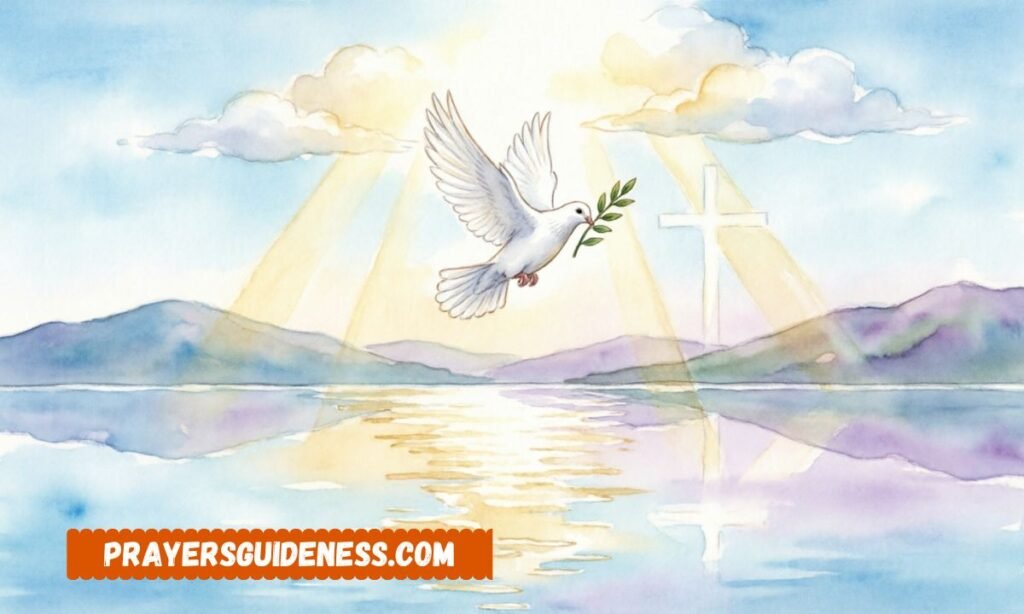
“The peace of God, which transcends all understanding, will guard your hearts and your minds in Christ Jesus.” — Philippians 4:7
Paul wrote the letter to the Philippians from a Roman prison one of the most unlikely places to write about joy and peace. Yet his prayer for the Philippians is centered entirely on the gift of God’s peace. He instructed them to bring everything to God in prayer with thanksgiving, and promised that as a result, the peace of God would stand guard over their hearts and minds.
This prayer is especially powerful because of its context. Paul was not promising a peace that comes when circumstances improve. He was describing a peace that exists in the middle of difficulty the kind of peace that makes no logical sense from the outside but is unmistakably real to the person experiencing it.
This prayer challenges us to bring everything to God our worries, our fears, our uncertainties with a thankful heart. The promise is not that the problems will immediately disappear. The promise is that God’s peace will stand guard like a soldier at the gate of our hearts, keeping anxiety out and keeping faith in.
Frequently Asked Questions
What is the most powerful prayer in the Bible?
The Lord’s Prayer in Matthew 6:9–13 is widely considered the most powerful and complete prayer in the Bible because Jesus Himself gave it as the ultimate model for how to pray.
Who prayed the most in the Bible?
Daniel is noted for praying three times daily without ceasing, even when it was made illegal and could have cost him his life.
What is the shortest prayer in the Bible?
Peter’s cry “Lord, save me!” in Matthew 14:30 when he began sinking in the water is one of the shortest and most urgent prayers in Scripture.
What makes a biblical prayer powerful?
Biblical prayers are powerful not because of their length or eloquence but because of the faith, honesty, and surrender behind them and because they are directed to a God who genuinely hears and responds.
Can I pray the prayers of the Bible for myself today?
Yes, absolutely. The prayers of Scripture are living words inspired by the Holy Spirit and are just as relevant and applicable today as when they were first prayed.
What is the difference between intercession and personal prayer?
Personal prayer focuses on your own relationship with God and your own needs, while intercession involves standing before God on behalf of others praying for their needs, protection, healing, or salvation.
Why did Jesus pray if He was God?
Jesus prayed to model for His disciples what a deep relationship with the Father looks like and to show us the importance of dependence on God, even in moments of great power and authority.
What does it mean to pray without ceasing?
It means maintaining a continuous attitude of prayer and dependence on God throughout the day not necessarily speaking words constantly, but keeping your heart turned toward God in every circumstance.
Is it okay to be honest and emotional in prayer like David and Job?
Yes. The Psalms and Job’s prayers show us that God welcomes complete honesty including pain, confusion, and even complaint as long as our hearts remain turned toward Him.
What can I learn from the prayers of the Bible for my daily life?
You can learn how to worship, confess, intercede, ask boldly, surrender, thank God, and trust His timing all essential elements of a healthy and growing prayer life.
Conclusion
The 30 most powerful prayers in the Bible are not just interesting historical records. They are living invitations. Each one is God’s way of showing you what prayer looks like when it is real, honest, and rooted in genuine faith. From the simplicity of the Lord’s Prayer to the raw desperation of Jonah in the fish’s belly, from the bold intercession of Abraham to the quiet surrender of Jesus in Gethsemane these prayers cover every human experience and every spiritual need.
What they all share in common is this: they were prayed by real people who believed that God was truly listening, truly powerful, and truly willing to respond. And God proved them right, every single time.
The same God who answered Hannah and Hezekiah, who met Moses on the mountain and spoke to Jehoshaphat through the prophet, who raised the Shunammite’s son through Elisha’s prayer and sent fire from heaven for Elijah that same God hears your prayers today. The Bible is proof that prayer changes things. Let these 30 prayers inspire you, challenge you, and breathe new life into your own conversation with God.

4 thoughts on “30 Most Powerful Prayers in the Bible”